This transcript is automatically generated
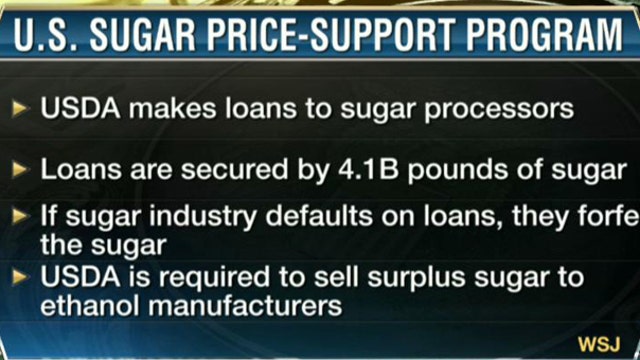
-- call -- once we bail out USDA made by 400000.
Tonnes of sugar from processors and ordered her to prevent them.
From defaulting on 862.
-- million dollars in government loans.
This by the way is the same agency that warned of widespread -- shortages.
Due to a lack of funding just a few weeks ago.
And of course the government has been making cuts left and right to do things that we quote can't -- four -- you know like air traffic controllers medical research public school teachers stuff like that.
But it can -- 862 million dollars on sugar and the icing on the cake.
If the deal goes down the price of sugar is going to shoot up.
And since just about everything you eat or drink have some sort of sugar in it you'll be feeling the hit the grocery store for more on this.
I'm joined by Leary -- president of the national confectionery is association.
Why did she ever getting a bail out Larry.
Well.
Because there's this crazy.
US sugar program it's one of the last programs left.
That protects and defends that commodity.
This is in -- so called farm bill and what this program does is it.
Prevents sugar from coming into this country.
So it protects the sugar growers in the country and it also has a guaranteed price itself that if the price gets too low.
Then the government -- to buy it.
And put it in warehouse and then eventually sell -- it's crazy.
It isn't seen so now they are being potentially this year they're going to be forced to by the sugar because.
What is going on in the sugar industry right now but it's such a terrible year for sugar.
-- way it it was a good year for sugar because the sugar -- Farmers and it in the midwest and the sugar cane farmers.
Had a really good year in terms of production and so there's a lot of -- Europe on the market.
And but the real reason for this is this.
But ups and downs of the market it's not a free market it's really run by the Department of Agriculture so the secretary of agriculture decides how much.
Sugar can come into this country which is very little and all of this is done to protect the growers yeah because this program has been around since the depression.
So I can feel people shouting at the television right now they're saying things like you know we do similar things for the corn industry.
And for the milk industry and for cheese and that a lot of this -- to do that if there's about crop when here we don't want the sugar farmers to get wiped out so that we -- don't have sugar.
You know the next year how do you respond to all of those -- It's forceful there's plenty of sugar in the world than what what there should be as a free market and sugar.
I represent the US candy industry and -- -- we don't have anybody in the nobody's protecting us nobody is saying.
Foreign candy and chocolate can't come into this country's when you you know we that we we have to compete and we've -- We need the growers we need the sugar growers were not against them.
We just feel that they should have to compete in the free market just like we do -- dislike most businesses in the United States do -- out there yet they're.
They're very few of these protective commodity programs left -- that one of them.
No and we are watching -- go by -- the -- its honesty is right to tell you peeps are one of my -- things in the whole entire world and it's like that time of year.
-- totally distracted but this.
400000 tonnes of sugar.
That they are there there again.
Proceeds OK -- -- -- yeah it's like a real problem anyways so.
All the sugar but the government's gonna buy and job.
Is enough we have some fun facts I mean it's enough to make a 142 billion Hershey's Kisses which my two -- -- easily.
Nine point 3000000012.
Ounce cans of Coke.
42 point seven billion Oreo Cookies well.
What happens in reality there were having fun what happens in reality the government really -- that sugar what do they do -- they really take delivery.
They it's at a warehouse and it's owned by the government and now under the 2008.
Farm bill and that's where the sugar program resides is in the in the farm bill.
They're actually going to have to sell most of that sugar to ethanol producers.
So it's not even it's not even -- go to food.
You don't get a -- when you look at the confectionery industry where we're only 2% of the calories.
And in a person's diet and and the other thing about sugar.
In a teaspoon of sugar there's only fifteen calories yeah so you know moderate amount of sugar is finally all of these.
I don't tell Mayor Bloomberg that he'll come it'd take publisher -- I don't know like before we go to every promise of -- would tell them has what does it mean for the average person -- we have this problem insurer in the government's.
You know trying to hold this floor on prices what does all of this that's happening this year -- to the average person is going out -- -- -- just by sugar for -- copy.
Well -- of course all the stuff takes time but.
I think it was Iowa State University did a study that showed because of the sugar program that we have -- cost consumers.
Almost four billion dollars a year more because you're right sugars in a number of things -- in ketchup and mayonnaise and salad dressings and that sort of thing so.
It means more it meets consumers' are gonna pay more for their food.
And our Larry thanks for coming -- we appreciate your time have a -- for me.
Thanks for having me still it's our --