You're watching...

Canadian Minister: Science and Facts Support Keystone XL Pipeline

Details

  • Description

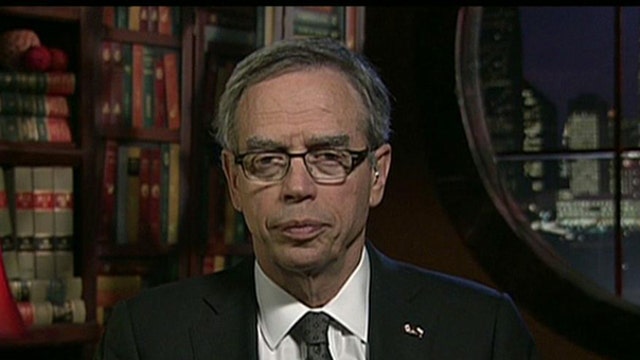
    Canadian Minister of Natural Resources Joe Oliver on efforts to get White House approval of the Keystone Pipeline.

  • Duration 6:17
  • Date

Clips

Also in this playlist...

Latest Video

Auto-advance: ON

Auto-advance

Transcript

This transcript is automatically generated

Nearly all systems are go on -- Keystone Pipeline.

Everybody that is except for President Obama.

Americans overwhelmingly back it's approval hitting a record high of 70% this after the State Department shut down the green argument against the pipeline on Friday.

-- -- keystone won't hurt the environment after -- so is there any reason for Obama not to green -- the project now.

Canadian minister of natural resource is Joe Oliver touring the US this week making his case for the Keystone Pipeline.

He joins us now from Houston with his message to the US.

Mr.

Oliver thanks for joining -- I've got to ask you you're all over the country talking to the American people what's your message.

Our message is firstly that Canada can be an important.

Reliable.

Supplier of energy to the United States we're of course a great friend and an ally.

And we have an excess amount of of oil.

And are in fact now exporting more oil to the US.

That in the next two countries combined some two point seven.

Million barrels a day of of oil and petroleum products of which.

One million comes from the oil -- so we we see ourselves not only is a reliable supplier but also.

And environmentally responsible -- All right because our let me ask you imagine water all -- very let me ask you this you know I mentioned before that 70% of Americans support the pipeline.

In fact 57%.

Of Democrats in this country support the pipeline so it seems to me it.

The natural target for your argument shouldn't be people all over the country -- should be Washington and in particular President Obama.

Why -- you they -- today.

Well first of all.

You don't have to say you know we're we're respectful of the of the US.

Our regulatory process and you know the president we making that decision.

Based on and his understanding of the national interest.

I do intend it to go to Washington when I have an opportunity to meet the next secretary of of energy.

Yeah it is a confirmation hearings so I will be a going to Washington but it seemed to me why should know week's -- -- final.

Approval.

Big money and my only day sir can you afford to say things all in good time.

Because it seems to me that there is some urgency -- this decision.

Well we certainly would like to see the decision.

You know one.

Finished in in an idea and reasonable timeframe.

But you know it's -- you know we're not to.

We're not in -- position to tally of the US government what it when it should do.

We we are I think -- a position to lay out the facts and the arguments and you know the secretary of of state.

John Kerry said he's not a move by ideology and pollution is concerned about the environment he's moved.

By science in the facts well that's a good thing because that's what moves us and we believe science and the facts support.

-- he still functional and certainly that's what the State Department had to say about this they said.

This decision is it to go ahead with the pipeline would be environmentally sound that it wouldn't even impact the rate of development of the oil sand so.

Interesting stuff there but I have to ask you.

Last year and you said this on this program just moments ago.

That Canada will environment will develop these oil sands in an environmentally.

Are responsible way.

And -- that just last year there were several spills in Canada in 2011 the biggest spill ever 28000 barrels now.

Having asked the question I'm not putting us up on a pedestal because.

This -- -- we've had in this country Exxon Valdez and BP were far far bigger than that.

What would you tell the American people that might be concerned about a spill.

Well first of all.

Pipeline transport.

Is by far the safest form of transport and it's really -- very very small portion.

Of the oil that's transported.

-- and actually leaks or where there's an incident.

-- the number is actually 99.9.

996%.

Which is safely transported.

Now that doesn't mean we shouldn't as an objective.

Look forward to zero spells or at least -- zero.

-- seriously -- but we're we're working on that issue.

Technology is improving.

We've increased by 50% the number pipeline inspections.

We've doubled the number of annual audits to make sure we.

We are aware of problems in advanced.

And it restart the maritime safety that is to say yeah the safety of tankers we've we've put in a water really important our rules.

Which -- Preclude any possibility of a repeat of Exxon Valdez and we now all tankers have to be double hulled.

There's mandatory pilot stage there has to be tugboats capacity to most of glanced navigation equipment and -- to be working and so on.

Well at at you know I have to say.

We already have 2.5 million miles.

A pipeline in this country.

It's not like it's a new thing -- we're showing a picture right now to our viewers of what that actually looks like.

Tell us why this pipeline is still import look you guys -- to develop this city will right.

Sure sure we -- well let me -- -- let me reinforce your point in the last seven years.

United States is build a 180000.

Miles of pipe and the and improve unapproved portion of keystone is only 850 miles.

So.

Yeah that this is important.

Too Canada United States.

Because it will deal with national security issues it will displace oil coming from less friendly and less reliable countries.

It will create enormous -- jobs.

Tremendous economic activity and a lot of revenue to governments.

Well we can is a little economic boost.

That is for sure yeah we -- come up up up and thank you so much for coming on the show tonight minister Oliver really appreciate your time.