This transcript is automatically generated
I -- you know the story the president threatening Armageddon the cops are in place so how bad will it really date.
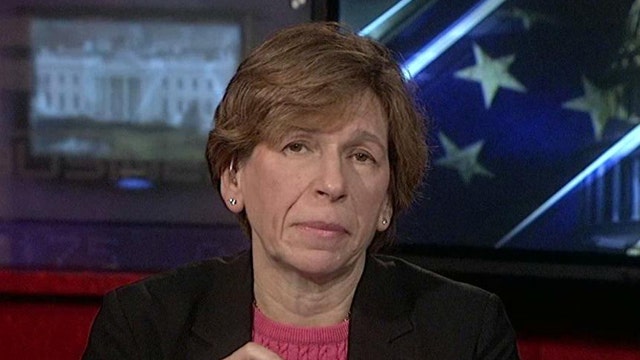
Returning to the company now -- Weingarten the American Federation of Teachers trying to welcome back always good to see it back it.
Thank you Stuart I think having they have been promising our view is hard numbers on how many educators will be laid off because of the all all the furloughed because of these sequester cuts and when will look follows -- can you tell us.
So you know I am not gonna.
Overstayed.
What's gonna happen here I'll tell you what we know.
That federal dollars go to the most vulnerable kids.
It's only about 10% of school funding.
But it goes for the most vulnerable kids so.
We note that there's going to be three.
Kinds of cuts number one is in title one.
-- will affect about one point two million kids.
I'm starting as early as probably April or may and really affecting kids in September.
And that if you do the math that could mean 101000.
More 101000 fewer teachers.
In terms of special needs kids if you do the math in terms of cuts it could be 72 few where.
Teachers and Paris and people who provide services to kids who have disabilities OK and then if you do the math.
It could mean 141000.
Fewer teachers.
For kids who are in things like head start but this is my point that I want to make it -- This is what these folks do get.
But a lot of sacrifice -- been under I have to follow up with -- us a -- you've given us the hot evidence this is what you site will happen probably starting in September OK I've got.
Why do you why does the president.
Oppose flexibility.
I mean you could W I mean John Boehner wants to give the president flexibility on where these 2.3 percent -- -- Actually imposed spread the pain around why does the president opposed that.
So let me just -- let me just be in my -- house hear about kids and schools.
And just -- he is that we've had.
300000.
Teachers.
Fewer teachers in this country in the last 34 years -- cause of the recession a lot of that was because the state and local costs.
And what that is meant is that kids have had.
Far less you know music and our Ed class sizes of going up.
But this is what's really happening this is why these cuts are really hard.
-- -- -- -- -- the most you've got to address the issue flexibility.
You've got to about what -- because -- -- that America is asking you got to -- 2.3 percent from spending out of three point seven trillion dollars.
And yet it's got to be the way the -- written it's going to be across the bowl everybody's gonna take that caught that includes essential services.
What many Americans are saying is why can't we have some flexibility so you can cut it 2.3 percent not what I read -- the most but -- it -- the least.
Why -- a what credit oppose that how to answer that question why is the president opposed that.
That you're gonna have to talk to the president about Arnold why is that what do you oppose it within the education realm do you it was -- -- We have been very open to finding different ways to find money for -- kids because what -- -- seeing.
Is that 70000.
Kids are going to lose -- so -- -- All he's doing so coaching pressure up on on -- -- continent and saying.
Come on mr.
secretary we would like to -- janitors for example why don't I don't wanna cut its stock can you do we don't I'm cutting out appraisal of their -- get over the weekend according.
But I would suggest that janitors are far less important than had stopped meals a law teaches for disabled kids wouldn't you actually making actually making sure that schools don't have bed bugs and -- roaches all things like that that are pretty important go to yeah.
Thank you don't say that yeah.
But you don't want to put some -- All separate truth Bonnie Duncan decided.
Maybe we could use a few less teaching assistants or janitor is all how about the 82 teacher improvement improvement programs that we have and funds and -- why don't you -- why don't you put pressure.
To spread back pain to nonessential areas.
Why -- resisting that.
-- we don't actually resisted -- we put pressure on them all the time to actually spend money wisely but what I am saying to you is that that money right now.
That's kind of cut schools.
Let me give you one example.
In Philadelphia.
A teacher who already has set generate more kids in her class this year.
She's gonna lose the people that actually help kids.
Do reading.
Intervention I'd go to -- -- this point.
Stuff so I'm gonna ms.
Weingarten but I don't understand why back teacher can't do without -- janitor for six months I don't know I don't think.
I think that if you actually want to make sure that schools are places that our health think.
You wanna make sure you have that what I'm coming away with ms.
Weingarten what I'm coming away with from this is that you really don't want to spread the pain you want the pain to be inflicted so you can get actually that's what I'm actually I don't think actually what I'm saying to used to it is not that -- all -- -- we've already had 300000.
Cuts in terms of teachers and the the bottom line is.
This is our kids in this refugee camps we've done as the F I don't know I know we had a I'd just leave actually is -- actually it's nice to I'm just not hearing you say you're gonna grab hold -- secretary Arnie Duncan insight law.
Would you rather have fewer janitors -- fewest special led -- we -- unknowingly around so perhaps.
-- and we'd rather have fewer people who are doing testing.
We'd rather spend far less money on testing companies or on companies like Rupert Murdoch's company was doing that -- -- what plan.
We'd rather have less than that you're totally right about that -- stuff.
But in terms of real services to kids.
We need to make sure if some if a child a struggling -- reading.
You wanna have that service -- -- to make sure that child this -- that time brandywine so that's what we're trying to I appreciate your being with us it's a -- and -- -- -- -- -- -- back -- much thank you.