You're watching...
Acting Treasury Secretary on Dodd-Frank
Details
-
Description
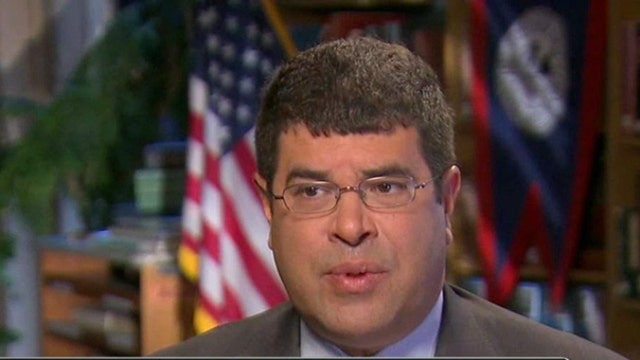
Acting Treasury Secretary Neal Wolin on how Dodd-Frank protects taxpayers from large failed financial institutions.
- Duration 6:04
- Date Feb 26, 2013
You're watching...
Acting Treasury Secretary Neal Wolin on how Dodd-Frank protects taxpayers from large failed financial institutions.
Also in this playlist...
Auto-advance: ON
Auto-advanceThis transcript is automatically generated
Five -- let's have backed up to let's -- -- at the CME for the second part of -- exclusive interview.
With acting Treasury Secretary -- wall -- and find out what he has to say about too big to fail list.
What can tell you this.
Everybody of treasury agrees including -- -- on the acting Treasury Secretary.
That there is absolutely no more taste for a taxpayer funded bail out the likes of what we -- four years ago with AIG.
All the other problems but specifically he is one of the architects of Dodd-Frank he worked on it very hard and the question becomes.
There are people who say.
It doesn't do enough their other people who like attorneys general from eleven states including Oklahoma who last week was on Fox Business saying that it gives treasury too much power.
But I begin by asking him does Dodd-Frank truly eliminate keeping us the taxpayer on the hook from too big to fail banks.
The statute makes clear once and for all that taxpayers are not -- in the on the hook for dealing with failed financial institutions.
It creates the statute does a whole process by which on the owners of those firms the management of those firms.
Have to take responsibility for those failures and the biggest financial firms in the country if will have to gather together and make sure.
That whatever is needed in the way of resources is provided so that.
Tax private payers are held harmless.
Which you say right now are there any financial institutions here in the United States that still feel a little too big to fail I mean it could be a city it could be JPMorgan.
Goldman Sachs if they were to run into some type of trouble -- -- forcing they've.
-- point of Dodd-Frank was to create a system of financial system in which we can survive the failure of big farms to make sure that we.
Create more capital cushions we have stronger credential requirements and then as the Dodd-Frank statute.
Provides and now the regulators have put in place.
A set of procedures that will make sure that when a firm does fail it will fail without causing undue pain for the rest of the financial system.
My dad used to say you can't please any of the people -- at the time I mean there were people who said Dodd-Frank didn't go far enough and now you've got eleven attorneys general from doesn't -- states who say.
It gives treasury too much power that the Treasury Secretary can pinpoint -- two big problematic bank.
And liquidated within 24 hours and that does not give people enough time in the bond holders etc.
-- they have a point.
I don't think so -- I think that this statue was very.
Carefully crafted it doesn't give a -- -- treasury.
So much power that -- you know resides in the financial stability oversight council which is a collection of all the regulators they have a process the process that's very well thought through.
There was subject to lots and lots of public comment and adjustment.
On the basis of that public comment I think that this is a statute that is an important addition to the safety in the stability in the resilience of our of our financial.
So you think it'll hold up against eleven attorneys general who are fighting -- -- China every Treasury Secretary going back to Robert Rubin to Larry Summers -- John Snow Paul O'Neill.
Geithner Paulson all of them they have.
Edged toward the Chinese -- -- -- sure you want -- currency float freely in a fair and open market.
Minor minor incremental.
Improvements there but barely at some point.
Do you feel that the Treasury Department under this administration has to get a little bit stronger and push the Chinese so that it's a -- situation where they their currency floats freely -- the rest of our currencies doing the open market.
Well you know we have been very much engaged in the Chinese over a number of -- as you know there's and we continue to push and it's not only in our interest that day.
Allow their -- -- to -- fluctuate with you know market conditions was also in their interest as we and they together try to create the conditions for.
Balanced growth on a global basis.
You know -- that they need to do more the their currency is still undervalued when it has appreciated by 14% or so in real terms over the last.
Few years and so that is progress and we will continue to stay at -- as we engage the Chinese on this very important issue.
Speaking of progress.
US manufacturing.
Progressing day by day you toured UPS yesterday here in the Chicago area.
And you're also making the connection between that and and stimulus projects.
Things like improvements on bridges over the Chicago river make that connection for our viewers of why that matters to big business to business actually.
It's like getting a tax break and a sense it makes it easier more efficient for them to do their business when they have roads and airports and rail systems.
And bridges that they can.
Used it to the conduct of business and to transact their affairs and it's hugely important if you think about why a business -- manufacturing business.
For example of one this year in the United States as opposed to other places that could be.
The extent that it has these infrastructure.
Improvements thinks that this has the capability to move -- goods over good.
Are well -- roads and has -- to have port facilities and so forth.
Those are hugely important on aspects of making this country more business friendly of bringing jobs and manufacturing.
Into United States and being more globally competitive.
As we finish up.
Business friendly do you feel that the Treasury's.
Relationship with US business both big and small it's a good one right now stronger perhaps I do I think it's been good for.
Quite awhile as we spend a lot of time -- engaging with business listening to them seeking their views.
Interacting with them it's not contentious.
No I don't think so not at all as we we.
We've we've listened to a wide range of stakeholders business obviously importantly included.
And I feel like come.
When a good place with them we're not always -- agree on every issue for always gonna take them seriously -- -- the listen and we're always gonna hopefully learn from what we hear.
Did you get to sign any money -- acting treasury second numbers but I feel -- a dollar and yeah.
Perhaps.
I should have asked them.
Up that would be something -- -- frame because of course acting Treasury Secretary during historic type deal Woolen.
Giving us a Fox Business exclusive and again we're about sixty hours away from the sequester so we'll be watching whether there is that eleventh hour deal coming up.