You're watching...

Are Warnings of Sequestration’s Impact Overblown?

Details

  • Description

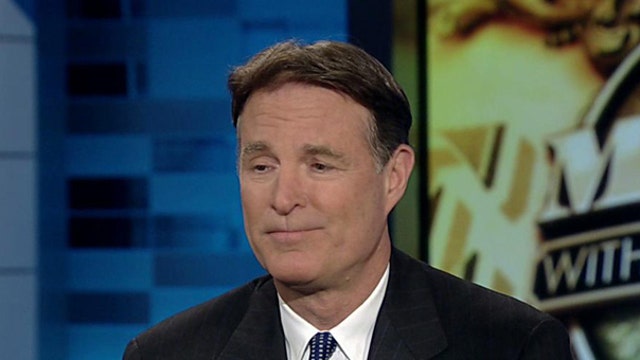
    UBS Economist Kevin Cummins, former Sen. Evan Bayh, (D-Ind.), and FNC contributor Stephen Hayes on the potential economic impact of sequestration.

  • Duration 6:36
  • Date

Clips

Also in this playlist...

Latest Video

Auto-advance: ON

Auto-advance

Transcript

This transcript is automatically generated

So speaking of sequestration it is set to hit this Friday march 1 -- hit go anywhere without being absolutely bombarded.

With how bad it's going to be all the way around economists from UBS are saying the headlines that your reading in the mainstream media there they are all wrong.

They say the actual near term cuts will only have half.

Of the 85 billion dollars we keep hearing about that's what economists to UBS are saying so is the -- being pulled over everyone's eyes.

Plus taking today's money power panel with me now is Kevin comments.

As with UBS we have former senator Evan -- -- Fox News contributor he's actually here in the house for the first time with me it's coming onto it.

And of course that Stephen Hayes as well with the weekly standard Fox News contributor thanks to all of you and Kevin.

Start with you know.

Because -- UBS is saying that those big bad headlines that you know we're watching and there were being.

Warned are going to destroy the economy the country that that are overblown.

I I that's right and I think there -- scare tactic quite frankly.

And it's not all that surprising that if government.

Spending is going to be cut -- politicians are gonna exaggerate the impact.

If you look at budget authority.

It's 85 billion cut to the current fiscal year.

Outlays lag authorities so the CDO about two weeks ago came out and said the likely impact is gonna be about 44 billion dollars.

If it's fully.

As -- currently -- -- take place beginning on Friday.

So the impact of GDP 44 billion dollars is only three tenths of percentage of GDP.

You know it is a look a little bit of ahead for the economy but yes certainly being overblown and it's it's not gonna derail the recovery.

Senator you come from Washington you know better than anyone else let -- pick up from the animals are -- lay's death but yeah he's residents haven't questioned see you know how they operate haven't that is -- better that's fair that's better.

You know they're saying that when you talk to -- -- the talk about laying off government workers over really talking -- for allowing people for 22 days the same way a lot of industries work the auto industry and and there are a lot of manufacturers have to work in this manner is our.

Currently talking about here do you think.

Well that's one of the things we're talking about their the other cuts in addition to -- -- but the sequence of events I think is that a little misunderstood.

The -- of this sequestration will going to -- -- -- of the first I believe under federal law you're not allowed to furlough -- went for thirty days.

So I don't think the furloughs can take place our won't happen for awhile but in between as the congressman previously mentioned this of the -- the continuing resolution -- to be dealt with it keeps the government open.

So my best guesses.

That what happens over the next three weeks is gonna determine what happens here and -- -- -- does not break loose yeah over the next three weeks something will be put in the continuing resolution that would give more flexibility to these departments to manage these cuts in ways that will reduce.

Any dislocations that might take place.

Stephen Hayes -- something that the senator just said really jumped out of me -- when he said that that without the continuing resolution can't keep Washington open don't know quite well.

What happens -- a broader problems prop -- -- definitely.

Let's -- that problems you have right when it pretty distressing given how -- how they're operating right now what -- not so much.

Well look I mean I think it's always a good idea to have Washington now if you -- -- few days off and spend lots of our money if that that's what they do but that's not the way Washington works of course -- in a four and has a few literally had a few days off off the job they'll they'll find ways to spend money.

The other -- in other ways.

I think the big picture question here is.

With respect to sequester with respect to debt ceiling with respect to our overall spending trajectories what are we doing on entitlements and I know the senator's been vocal about this.

If this doesn't deal with the drivers of our debt that's the fundamental problem here so.

You know is there may be a short term hit the economy as Kevin suggested.

And I don't think -- you should shrug that off but at the same time what what's happening here the discussion here in Washington.

It's focused on things that are not going to solve the long term debt trajectory that's -- that's where the conversation needs to be.

Yet no that's actually true and in the meantime Kevin we are talking about things like.

I think things that are really distressing one of the facts and they put out there is that about 101000 kids in Texas for example.

Are going to be getting their vaccines that they will be getting -- and -- been -- measles vaccines.

Scary thing -- -- of people who have kids.

You know about this potential cut do you think that's true and that's what what's gonna happen.

No and and I think it as I've been mentioned.

That would -- the amount of job cuts that are you know projected to take place and announced within various areas of the government.

You're just likely to see a reduction in hours worked in and not so much actual layoffs and unemployment going higher so it's clearly a scare tactic.

And in no way the whole debate was shaped up.

By the administration.

Requires higher taxes and they know they're not gonna get higher taxes after the tax break that was.

Put in place at the start of this year so the -- that compromise isn't much and in fact.

You know there hasn't been really any clear.

Alternative plan for spending cuts and it's been very disappointed -- -- to see.

The administration's gonna be coming out with budget proposal sometime in March as well so that's another thing.

That'll hopefully we'll see some sort of credible deficit reduction plan because right now we haven't gotten anything.

And is now absolutely senator your pick up a -- -- we saw on the screen there as he was talking -- in the White House has put up points about 101000 kids not getting their shots they've sent -- Ray -- to talk about the fact that.

You know we're going to not have the repairs that we need on the runways that we're gonna -- flights delayed by ninety minutes.

But we're not talking about really tackling entitlement problem.

Well that's right and Steve as Steve mentioned that is to long term challenge -- -- the health care area Medicare Medicaid those of the numbers that really explode in the out here so we ought to be doing right now is.

Not depressing short term aggregate demand at a time the economy is so fragile but instead putting into place.

Things that will gradually over 203040 years get the entitlement burden down.

And that would make our country healthier in the long term fiscally but that just didn't seem to be on the menu right now.

But the good news knows there's a good new is -- as right now this is lot of noise its communications were going on.

In the long run reality will -- out.

And the cuts will have the effect they're gonna have and if they're not so bad well then I won't go for probably provide a little -- flexibility in terms of how to implement them.

And god willing we'll get to real debate about entitlements but unfortunately I'm not terribly optimistic -- this right now I think this is my the last chapter.

In the deficit reductions -- for a -- because the two parties are just so polarized.

Yeah yeah not on that depressing note -- that indicates to all of you for joining us we appreciate it.

-- --