You're watching...

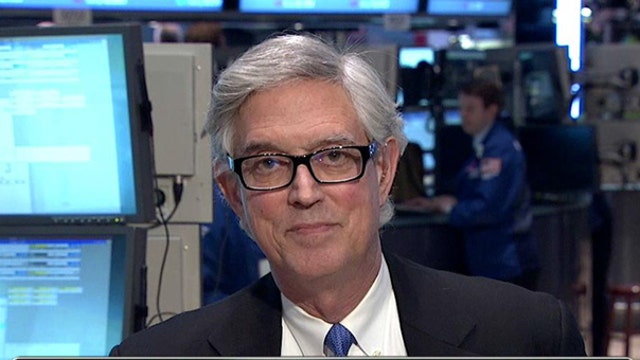
Former Campbell Soup CEO: Have to Be Very Selective About New Markets

Details

  • Description

    Former Campbell Soup CEO Doug Conant on why companies, particularly in the food industry, should expand into new markets cautiously.

  • Duration 5:18
  • Date

Clips

Also in this playlist...

Latest Video

Auto-advance: ON

Auto-advance

Transcript

This transcript is automatically generated

People's right there.

-- of consumer Staples Hynes buyout has been on everyone's radar recently many investors are wondering.

Although more deals on the horizon and is the food industry ripe for more consolidation.

Joining us now from the New York Stock Exchange and a Fox Business exclusive former Campbell's -- CEO.

-- -- is also the founder of -- leadership and thought thank you so much for joining us it has been an -- -- month hasn't it for the food industry.

We -- the Heinz -- do you think there's more consolidation.

Out there in the near future.

Well I think it's like an accordion nationally it idea that we -- we see some consolidation and -- we see companies like Kraft breaking apart.

We're all trying to find optimal ways to create economic value in a tough market.

And so I think there will be some consolidation but I think you'll also -- Some companies being created this more focused food company so there's no one size fits all strategy.

-- -- -- -- you know the dog that Campbell -- always been considered a very nice fit with -- Is that still a possibility.

Well -- I'm no longer part of the Campbell's organization so I couldn't comment on it.

I think Campbell's is very happy doing what it's doing independently and I expect -- -- continued could be independent.

All right well listen the third.

You know let you had your time -- Campbell we're talking which I know -- of your forma Campbell CEO -- This new managed to turn that company around when you take it over it was struggling how did you do that -- -- the keys.

Do you think looking back now to turning that.

Company around.

-- they the -- was to get -- focus strategy and we shed assets instead of consolidating.

And then to get our people highly engaged in the work and we -- world class employee engagement.

And as we took it created a more inviting culture we attractive better people on we delivered better products and only.

Over the decade we -- sales and earnings every year.

Scott return on invested capital up to 27%.

Built a marketplace presence and our -- categories that was second not and we had a great run it was a great decade.

But that's yesterday's news and now who die are the new CEO Denise -- Scott I've ever run for the next -- it.

And she well.

Well and part of that strategy strategy I'm sure it's kind of a dual mandate is that you got to strengthen your -- I get coal -- customer base but also you need some kind of trying.

And reach new markets and some say back -- really have an impact on the margins have you balance that.

Well it -- there's that there's a science and then there's an art to all this and that's the art of it.

-- you can't have leaky -- in your core businesses.

You can lose more in the core.

Then you can never art attract from new new new markets so you've got to do both.

You've got to continue to build the core and then you've got to be very selective about -- you're going to new markets because it's highly speculative.

Higher risk and you do it thoughtfully and flatly but it's it's no sure thing especially in the food business sure business is remarkably mature.

And you're gonna pay premium multiple for whatever -- -- And you've got a question whether you can get a good return on that investment so you've got to do that very cautiously.

What does you know like the food industry's been seeing a shift towards fresh.

Prepackaged meals on the go does this force someone like Campbell to kinda rethink their strategy -- -- product line.

Well life all the companies are trying to stay in step with consumer trends.

As the consumer demands more for fresh all the companies are finding ways to go there.

Campbell had a terrific acquisition largest one -- -- I believe and in.

Decades -- -- farms which makes fresh carrots and distributes them and fresh juices so.

They're not missing that trend at all.

Very good before you go -- wanted to mention this is international corporate.

Philanthropy day.

Why is it's so important for corporations to be.

Corporate good corporate citizens why is important to you well it's important to me but warm partly it's important to -- the businesses and the shareholders themselves.

-- our customers and our consumers want to work with companies.

And want to buy from companies that are transparent.

That are there to serve society as well -- assert their own economic interest.

And it's the price of poker today.

You have to be engaged in helping to build a better world why you're also creating economic value for your shareholders you've really don't have a choice anymore.

And so we have worked with that we've got a 180 CEOs.

Of our fortune 500 companies who are part of the committee encouraging corporate philanthropy now called CE CB.

And and we are championing this notion of building a better world and building a better company at the same time.

And I saw a terrific examples today front everywhere from IBM right Xerox.

-- it's happening all around us and we just have to find a way to tell the story.

And we thank you for that -- -- and thank you so much for joining us the former scenario Campbell Soup and founder of -- yeah.

We really appreciate it -- volume.