You're watching...

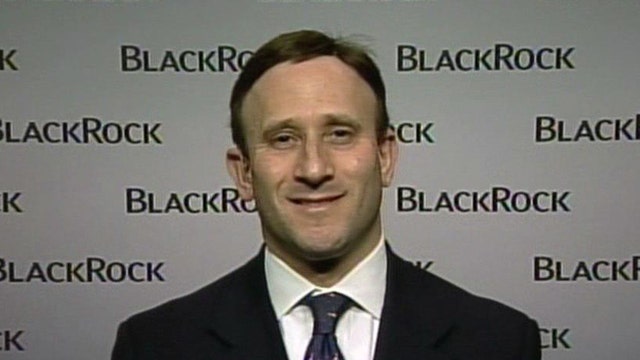
BlackRock's Koesterich: Invest in Smaller 'CASSH' Countries

Details

  • Description

    BlackRock chief investment strategist Russ Koesterich on investing in Canada, Australia, Singapore, Switzerland and Hong Kong.

  • Duration 4:08
  • Date

Clips

Also in this playlist...

Markets Now

Auto-advance: ON

Auto-advance

Transcript

This transcript is automatically generated

I think critical to more on the markets -- I'm -- you've heard this old cliche over and over the cash is king but.

We have a totally different and I take -- -- -- rust ostrich today.

And Ross is the chief investment strategist at BlackRock -- a starts its office of -- here we go another Wall Street guys who tell us cash is king but this is happening.

This is not a misspelling at the bottom your street it's actually an -- and for how you're investing these days so tell us about job candidates Singapore Switzerland.

And -- Hong Kong as well as Australia which is DA.

There's the map let me start with Australia you really like investing in some of these countries -- that -- outside the US -- What would we -- we get the basic theme here is a fairly simple one you think about the environment since the financial crisis.

And one of the conclusions you come to is that much of the developed world isn't a bad spot much of the emerging markets -- much stronger.

But there -- exceptions to that and the interesting thing is that the smaller developed countries like the want you just name cannon Australia Singapore.

Came out of the financial crisis in much better shape -- much lower debt.

Lower deficits and generally it less traumatized labor markets aware of our themes.

Is investing these smaller developed countries and -- -- the want to emphasize in these cash countries.

I think it's uninteresting.

Up point because there were a lot of stories done and we probably did some of them ourselves here about and I just pick -- -- is an example but they're banking system not having the types of trouble.

That our banking system had after the crash and in no way you're absolutely right about that -- what -- somebody watching says hey what's wrong with us and -- market's been doing pretty well -- spent 141000 on the -- in the United States what about us.

-- -- the short -- is nothing is wrong with us the problem is not that people should only US.

But most people probably -- too much of it cracked you know there's this notion of the home country bias for people got a huge concentration.

In their home market now which you point out that's actually worked out very well the last few years people have done well by -- the United States.

The problem today -- -- the issue is that the US -- still cheap relative to its history cheap relative to bonds.

Stocks in the US are expensive compared to the rest of the world they traded about.

A 40% premium.

So the suggestion is not -- the US but -- a little less of it and think about some of these international plays particularly these smaller developed markets.

Okay is that something somebody can really do something which is pretty easy use look at your 401K just change cavity here.

Allocation in terms of percentage that are you worried about something and particularly here in the US so you wanted to hear you did you know on -- sequestration.

Budget cut.

Which we'll talk about later with us senator brown now not bandwagon -- says sell the Washington just gonna make a massive into the markets have a real big sell offer or no.

I don't.

We're looking at a big sell off and we look at the good news is unlike the last few years re faced these huge extra state -- issues will -- survive.

Will the US -- the fiscal -- I think this is a more modest issue.

However that said the problem is we are putting a lot of fiscal drag on a slow growth economy.

If the sequester hits that's about 300 billion dollars.

In higher taxes and lower spending this year that's a lot of money for economy only growing 2% so my concern is not a major sell off.

But that growth may disappoint in the first half earnings may disappoint and we're looking at work eight garden variety correction should that happen.

Not to -- -- as the last thing -- visit its interest and we're gonna have this debate will continue to have it.

Now later on the hour at some people are saying this a question -- real big deal these these budget cuts and others are saying in the journal had an article about this morning and have been some conservative commentators made the point the last couple days.

We can handle it.

It's in his slow bleed and it's not as big -- deal don't listen don't don't buy the -- where are you on that.

I'm closer to that the that if we can handle it because I think that the size of the sequester is relatively modest.

But again the reality you can't look at the sequestered isolation it also think about the tax hikes and spending cuts from the -- -- -- deal.

In total again it's not a game changer.

But it is gonna be a drag during the first half of the year -- and shift your allocation a little bit the cash is king against Canada Australia or Singapore Switzerland.

And Hong Kong pretty good acronym -- -- ostrich block prospects not.

-- -- --