You're watching...

Should We Be Concerned About a Currency War?

Details

  • Description

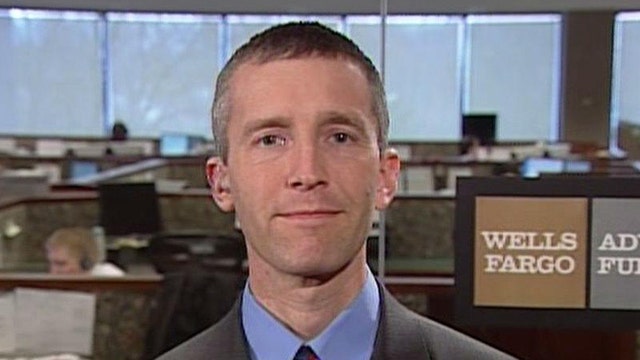
    Wells Fargo chief portfolio strategist Brian Jacobsen on the weakening of the U.S. dollar.

  • Duration 3:16
  • Date

Clips

Also in this playlist...

Latest Video

Auto-advance: ON

Auto-advance

Transcript

This transcript is automatically generated

And let's take a look at the US dollar the greenback trading down -- -- all other major world currencies today.

Another weekend leaders at the G-20 agreed not to target the exchange rates of world currencies.

Amid concerns that competitive devaluation could spark a currency war -- did -- -- -- said.

Let's just say the G-20 how to conclude any worries about -- joining us now with more is Brian Jacobson.

-- portfolio strategist at Wells Fargo Brian you can point the finger at Japan more recently for weakening its currency -- -- its exports.

But we are we not the biggest culprit through the -- is -- of weakening the dollar.

Well what the Federal Reserve read their quantitative easing program and they're loose money policy has been having me as a side effect a weakening of the dollar I think it's important though the recognized that really what the G-20 was saying is that we would not specifically target the exchange rate it -- try to weaken because.

That would then perhaps trigger retaliatory action by other trading partners so the Federal Reserve -- -- -- monetary policy it's almost like an unfortunate side effect it's not a deliberate tactic on the.

That not deliberate do we -- but what -- what is the likelihood that this turns into.

A full blown currency war with with these money flows just rushing into some of these.

Developing markets how much do we need to worry about asset inflation maybe not consumer price inflation.

We are certainly seeing signs of that globally even here in the US.

It -- that is something to watch and actually one of the leading indicators that I'm really watching -- to see whether or not countries are gonna start embracing more capital controls which is restricting the flow of money into or out of a particular country because they're concerned about.

All of the money that could perhaps inflate asset prices because you you put it perfectly sane that whenever you have loose monetary policy it doesn't just show while.

-- in consumer -- -- -- can show up and increases in commodity prices or other asset prices as well.

And that is indeed what we are seeing is this what's sometimes called -- reflation.

So we saw dramatic decline in asset prices but now they're being wreath -- at.

So I think that really what you have to watch is whether or not country stardom by embracing protectionist policy's not just in terms of capital controls but more importantly with trade restrictions.

Wasn't likely -- of that happening in which countries at this point concerning demise Brazil.

Yes Brazil's one of them that I'm really watching because they do have a history of imposing capital controls on foreign investors say just imposing a tax on foreign holders of very securities that they might -- so that is one of them that I really watching a lot of actually unfortunately -- American countries have somewhat of a spotty history when it comes to actually imposing these controls on foreign investors.

-- one area that I'm actually funny some encouragement and is in China now I think most people recognize that China has a history of imposing controls on foreign ownership of assets.

But they're beginning to relax those controls so as long as they don't reversed course I think there might be some pretty good investment opportunities over there.

-- has -- -- thank you so much for weighing a clue what is always a complex subject currencies Brian -- from Wells Fargo.

And -- them.