You're watching...
Dunkelberg: Minimum-Wage Increase an Anti-Job Policy
Details
-
Description
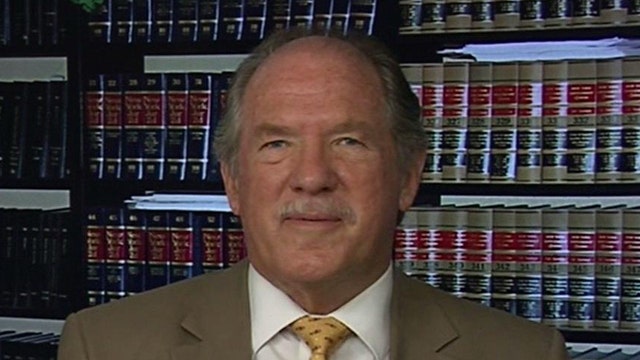
NFIB Chief Economist Bill Dunkelberg breaks down the impact of a higher minimum wage.
- Duration 3:06
- Date Feb 18, 2013
You're watching...
NFIB Chief Economist Bill Dunkelberg breaks down the impact of a higher minimum wage.
Also in this playlist...
Auto-advance: ON
Auto-advanceThis transcript is automatically generated
-- the State of the Union Address President Obama called for an increase in the minimum wage from 725 to nine bucks -- -- Paying people more sound like a good thing OK we -- that but our next guest says this is a major anti jobs policy has bring in bill bungled he's the chief economist at the and -- Bill -- -- all kinds of studies that say look.
That that on both sides of the fence it's good for jobs is bad for jobs is good for working people is trapped for working people tell me what you found it and if I've been.
Well I think most of the good studies tell you move the common sense answer which is if you raise the price of -- -- people take less of it.
And that includes labor and studies have shown for decades.
That in fact it's a job loser if you raise the price of the labor but you don't -- -- more output obviously cost go up and these costs have to be passed on.
And the in the form of higher prices but that.
That's the hurdle that they were perhaps the past to be hired that is they have to bring enough value to the company.
To justify the wage and we just raise -- we want to raise room seven to mine.
That's that's a huge hurdle that means a lot of job opportunity to -- missing as well as having some people fired.
Now about off studies that look at areas where at a minimum wage is -- up much higher than seven dollars and 25 cents.
And those studies conclude that in those areas the economy the local economy is doing better now.
How do you count that point of view.
Well -- pretty symbol that's a very it's a very naive study in general.
We find that congress never used to raise the minimum wage and -- times were good so.
You know the cost of labor went up if they were able to put more hamburgers out over the transom and bring in more value.
Then of course you still did okay.
But let's look at 2009.
The first half of 09 the economy's crashing GDP falling about 4% annual rate we lose 250000.
-- jobs.
Then the economy bottoms turns -- we -- 4% the second half.
We lose 580000.
In jobs and I think the fact that we raise the minimum wage that July by over 10% of awful lot to do -- that.
Is that accurate we lost 580000.
Teenage jobs in a six month period.
Is that -- would be -- -- would be LS tells us.
One last one real fast if you've got a number of forming if we put the minimum wage to nine dollars and Allah how many jobs do we lose can you estimate.
But we can't we can't estimated really well although we -- will be some but again it's not just losing jobs it's also preventing new ones from being formed so.
Just take a little pizza parlor that's doing -- hundred -- today.
They have they've got seven workers are working 2000 hours full time.
The wage bill goes from a 140000.
At seven bucks an hour to a 180000.
-- that's -- 40000 dollar increase bottom line how these little.
Owners of these little shops gonna handle that will raise prices hundred pods today that's at least the buck -- -- in the -- price and of course the higher the price of pizza.
The less taken they're goes jobs.
You we got -- -- don't -- look I thank you for joining us that an -- thanks Stuart thank you have been a store that.