You're watching...

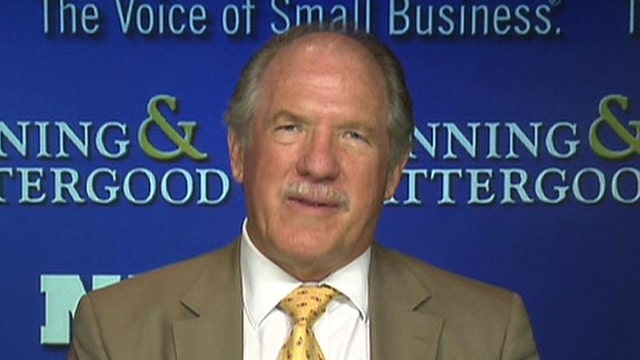
NFIB's Dunkelberg on Small Business Struggles

Details

  • Description

    NFIB chief economist Bill Dunkelberg breaks down small business sentiment.

  • Duration 4:12
  • Date

Clips

Also in this playlist...

Markets Now

Auto-advance: ON

Auto-advance

Transcript

This transcript is automatically generated

So much for your -- -- it.

I with the latest reading on small business optimism shares owners -- -- them.

Only it -- and I think little bit more help hopeful.

Despite increased our next guest says smile that residents still struggling joining us now -- -- -- NFIB chief economist.

-- you still say the outlook is really grim.

While the outlook gives Graham unfortunately and so we look at the index value did go up.

Nine tenths of a point from December -- 88 point nine hey that's so far below the average going into 2008 which was a hundred.

We're still -- recession level readings we really have a bifurcated economy you know you see the big firms.

-- record profits as a share of GDP you know making a lot of money the stock market look what it's doing.

That's half of the economy that's the big half the other half of the economy which is all the small firms.

That's they're not do well thought they were publicly traded the stock market would not look very well of also it's a very bifurcated economy -- made all of its money not in the US overseas right and that's the problem are little firms are domestic.

Consumer spending is very very wimpy it's not going anywhere and consequently you know they're -- gone anywhere.

That's really what -- -- all about right sales.

These guys are not -- a sales a look at what we get retail numbers out from are trying to be really -- to see how this payroll tax affected sales now in 2013.

Now that's right and of course those sales numbers we get will be mostly from big firms you know big department stores and Wal-Mart.

Which is important as Wal-Mart has -- the service is a very broad spectrum of consumers one of my favorite places to go but we'll have to see where the sales are for all these small firms -- know the I have my barbershop has five M five chairs only three are full they used to before -- you know five.

I mean we need to do more business of all these small stores so they'll -- -- people and give back to the 2007 levels of employment that's our key problem.

Because that's -- you setting your notes to that you know economists often say we need new firms out there we need new businesses -- you're saying it's all about the guys that are still that are out there already right we -- get them hiring first.

Exactly I mean eight million people.

Who -- who lost their job and recession word fired by new firm sacrifice -- right.

Existing firms and we need to get their employment level back up and -- happen gradually but it's very very slow process now.

They're still really uncertain about the economy now a lot of people are criticizing the use of that term.

And they say oh we are seven certainly -- yeah we do but uncertainty is not a constant it's a variable.

And right now you know is pretty high there's still a lot of stuff that's to be resolved.

See whether or not the US economy in the management team of the economy can get a -- a good path.

We -- higher taxes for these guys to get health insurance costs that basically preventing that from hiring more than fifty people.

What do you think they would like to hear tonight during the presidency of the union.

Well I think they'd like to hear the president say look I understand they're you know spending really got ramped up and we really can't afford that as a -- GDP.

And of course we know tax revenues are very low bottom part of that is because.

There -- some of the unemployed people aren't paying any taxes and if we can get employment back.

The tax revenues shall come up and we can get more balanced and then we can all get out -- path that we believe them than this that a driving my car one -- you're all by a new -- and that's the key here right so we -- good plan that the ordinary folk like us -- believe them and then we'll spend some more money and that will be good.

Build real quick the one positive though or one of the few positives with that they do have plans to make capital outlays so they do one again I'm bison staff maybe that's something.

While they do they we had a 21% say they ought to make capital expenditures but if you look at that historically.

That's really pretty low so we're still kind of bad in a recessionary levels -- that we need to see more capital spending 55% actually spend money in last six months.

But that again is historically low so we need.

More than 5% saying it's a good time to expect and that's who we are now only 5% so we need to seek capex pick up and then we get more hiring more infrastructure would be good all -- -- stuff.

GAAP all that good step build -- -- good step there we'll see you next month.

Thank you may see them.