You're watching...

Rosner: Not Seeing Fundamental Demand on Residential Purchases

Details

  • Description

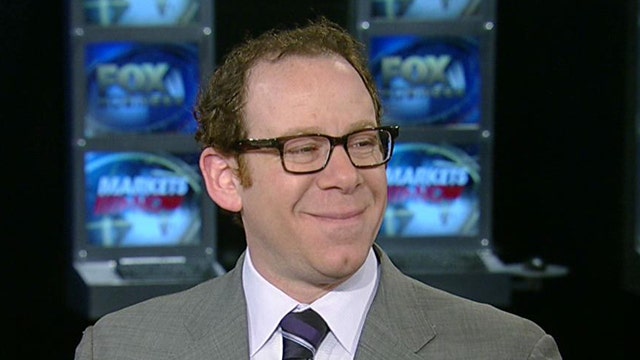
    Graham Fisher & Co. Managing Director Joshua Rosner argues that home sales are being driven by investors and that credit availability remains tigh...

  • Duration 4:14
  • Date

Clips

Also in this playlist...

Markets Now

Auto-advance: ON

Auto-advance

Transcript

This transcript is automatically generated

-- well grain vision is Josh Rosner was one of the first analyst warn us about -- that Fannie Mae Freddie Mac and of course.

There's credit rating agencies before the hasn't passed in 2007.

We joins us now this outlook for.

How'd -- I'm glad you're here thanks -- -- so you're not buying in.

In this -- well look I'm buying that we're getting a real recovery and building.

-- home builders you can show real new construction is up.

We're not seeing the follow through in in that market in a dramatic way -- foot traffic increase but credits not available.

And so we've got is still continuing situation where the buyers that -- seen or in large measure.

Investors.

Not fundamental part interesting basic credits not available cuts will get every bank on the planet comes to hear -- -- on these -- it's fine.

It's absolutely not true -- effectively take a look.

In -- your loan is sold to FHA.

And -- sold to Fannie or Freddie.

There are too many people who won't hold it you've got a very small securitization market -- we get sixteen billion done this year and in the in securitization.

But beyond that there's no market the banks to want to hold -- in fact.

The larger banks are being are being sort of disincentive from holding it by the regular I know was coming back in 2007.

Well look we get -- we've structural changes that back in 2005 I said -- back into doesn't wanna said housing is gonna outperform.

Because of these structural changes until interest rates rise unemployment rises or wages fall.

-- 2000 for the Fed started hiking interest rates -- we saw more than a dozen consecutive interest rate hikes usually they take twelve to eighteen months to filtered through the system.

So by 2006 is very clear it was coming that that it was clear to -- -- -- was clear that it was upon us and -- we yourself saying we have to fix the securitization market now so yeah.

There's been no functional fixed to securitization market we still don't have standardized representation -- warranty documents to define one -- obligation to another.

There's still no interest in in figuring out the infrastructure sure and the architecture so that investors have.

All of the transparency that I need so that they can actually.

Price -- appropriately so that borrowers.

Are being priced based on the risk.

Because there's still little very little appetite for mortgage backed securities especially among retail investors I talked to someone much smarter than earlier said he couldn't sell it to retail -- things like well who who the first all.

If we had securitization markets we would see the bids coming in.

Second although the the large fires historically about it but it's by -- all the large institutional investors -- still chasing chasing yield.

-- and so if you had a market come back the problems the architecture the problem is that.

It in the lead up to the crisis ever had okay I'm sorry to see defaults in the underlying collateral -- only payment default.

I don't know what my contractual right -- because -- got 300 different documents each with a different pooling and servicing agreement.

Each with different reps and warrants.

In part fractional.

Writes I'm gonna sell the mall until we saw a run for -- runner for the exits and no one came back to sift through them until very recently -- -- -- this that you're still saying we need more transcript we need more we need more transparency we need standards of structure.

-- we can take any of Freddy's PSAs and rep and warrant agreements and put those in place we also though need.

To recognize that it's not gonna come back in the same way -- that demographic problems right okay that that aren't the same so what are my talking about.

For the past forty years we had democratization of credit.

Consumer revolving credit expanded.

For forty years we had the benefit of the largest generation in American history entering their peak earnings years driving consumption for the past forty years.

As a result of the inflation in the seventies where -- forced through social change but that also the inflation -- the -- -- one income to two income households giving it one time boost consumption.

All three of those.

-- with our tail winds are now headwinds OK on top of that our youngest generation those who should be.

First time homebuyers.

-- are stuck with a trillion dollars a student debt.

Yes -- -- that it is slow growth GDP like growth.

Fundamental growth and housing for the for the next -- -- -- future certainly and I have to harris' last Rattner with Graham -- we content on that.

And thanks for having me all.