You're watching...
Where is the FEMA Aid for Superstorm Sandy Victims?
Details
-
Description
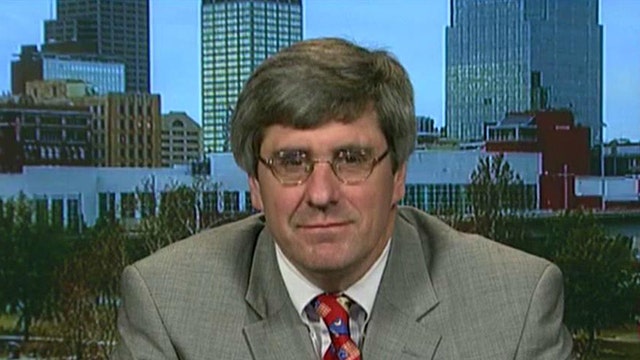
WSJ Editorial Board Member Stephen Moore on Superstorm Sandy victims’ efforts to get aid to rebuild.
- Duration 6:07
- Date Feb 7, 2013
You're watching...
WSJ Editorial Board Member Stephen Moore on Superstorm Sandy victims’ efforts to get aid to rebuild.
Also in this playlist...
Auto-advance: ON
Auto-advanceThis transcript is automatically generated
All that and more coming up but first our top story tonight.
Nearly half the country bracing for a major snowstorm however we are still dealing with the aftermath of another storm say -- But the red tape surrounding theme is National Flood Insurance Program.
Is leaving homeowners and businesses out in the cold with more on this Stephen Moore editorial.
Board member for the Wall Street Journal Steve welcome to the show always great to -- your -- Hi -- you're -- you look like you're an essay form place which is good to have lost her mouth -- It's could be in do you -- right.
I -- fetus now I want to hear what Chris Christie the governor of New Jersey had to say they have some thirty billion dollars worth of damage from sandy.
And boy is he upset with famous furious.
People need to know.
How much we're gonna have -- -- flood insurance to be able to rebuild or repair their homes the national flood insurance plan has stopped.
It's -- -- heard that and I think he's probably got it right.
Why can't the federal government government get money out to people in these kinds of cases.
You know Jerry it's a little frustrating that Governor Christie is saying what he's saying right now about the fact that FEMA hasn't performed because you know what it was two days before the election when he threw his arm around Barack Obama set out what wonderfully the federal government was responding to -- -- and -- we found out what eight weeks later.
That this is generally a catastrophic.
You you know dealing with the with the storm.
Had and this is not new Jerry you know this is exactly what happened with her Crane Katrina.
In New Orleans where took weeks and weeks and weeks for -- -- to get their for the people who needed it and you know my complaint here is a jury may call me old fashioned.
But what about going back the -- idea where local communities.
We're in charge of their own cleanup from these kinds of that natural disasters I look back at the evidence from what happened after the great Chicago fire what happened.
After the -- San Francisco earthquake and so on.
Most of the aid for those and by the way the cleanup was done very quickly and efficiently in those cities were rebuilt and the -- -- -- We've -- mostly what private money and private -- and local organizations south I don't know why couldn't we get.
Up tonight at UCL incredibly idea we've spent some time looking for the request for FEMA paid.
They just go.
About back.
I mean it it bears no resemblance.
To really that the disasters going on -- world what's going on it doesn't matter.
It's a way to get federal dollars but listen when it -- -- National Flood Insurance Program people pay for their coverage.
I'm not against them getting their coverage if they paid for it.
But the reality is the government can't get the money out the door they do a lousy job take a look at these numbers.
So -- -- when you talk about resolved sandy related claims famous.
Fulfilled 330 to 50% that's all may -- 50% maybe not.
Private companies 80%.
I mean the difference there is this down and when you make the point that -- we should just turn it over.
All of it.
To the private insurers well maybe that's just the way to go out.
You know what's ironic about that those numbers that -- up on the screen there are about they become the percentage of people who got private sector relief from their insurance companies are just beam -- Most people complain about the private insurance companies being.
Very good about going -- -- -- up at some manager at -- even -- I thought I think how I think one thing about this story that we should.
Not overlook is that one of the the aspects of flood insurance.
That creates what we as economists call a moral hazard -- -- right a lot of people take up the flood insurance but you know that almost encourages people to build and hurricane areas and in areas next -- that are up you know -- -- look like.
We are often subsidizing people who are very wealthy to rebuild and to rebuild and to rebuild areas they shouldn't even be -- That's right another fact that I want to talk to me about here FEMA is picking up the tab.
-- -- thirteen hundred hurricane sandy victims to have hotel rooms in New Jersey so let's think about this let's do the math on this.
-- thirteen hundred people overnight -- what 15300.
Bucks a night every night is people.
FEMA doesn't get the the check out they don't get -- check out they'd pay more and more attacks dad just keeps going.
Well I'm surprised that surprises -- yeah because yeah.
This is just the nature of government relief -- just very efficient it -- very cost effective this ties -- the other big story that's going on this week in Washington which is you know whether these federal agencies can you know cut five cents out of the dollar you know and they sequester cuts and all the agencies are drawn up their -- thank all my goodness we can't possibly you know absorb these costs most.
Yeah complete my -- and that's it that's going to be our deficit this year are you happy about that we're under a trillion book.
Oh yeah I'm not party right.
And the sequester is exposed to cut that by -- grand total of about 10%.
5% cuts in these agency great programs but your -- -- a perfect example what I'm talking about does anybody not really believed that FEMA couldn't increase its efficiency by 5% my goodness that's nothing.
Given the kind of waste and fraud and abuse that you're -- you've shown on the -- Look I think think obviously do.
Well that would be -- starting point.
That's not always get a shower that's for sure there's more to be dead -- let's go back Jerry -- my original idea out why.
Can't we get back to the old fashioned idea.
Of people getting relief you know from their own local governments -- -- state governments and in churches and in people on their area.
I was in Houston not want to go and people were saying you know we had a terrible storm in Houston.
Very few people got federal relief.
And they and the homes that were damaged in the stores that were damaged were very -- -- rapidly -- dealt with almost no federal money whenever we get this idea that everything has to be a federal responsibility.
It's -- -- public program.
A big pot of money that people like to dip into.
It's free cash.
Let's face it -- -- you make that claim to congress and looking out this is awful it's terrible we need the Dow and they get it well state.
It's always a pleasure having you come back soon degenerate I have we have to cut about -- weekend -- -- -- that -- can't thank you.