You're watching...
John Taylor on Spending Cuts
Details
-
Description
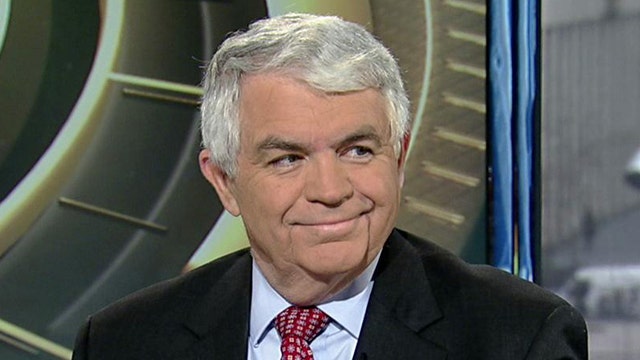
Hoover Institute senior fellow John Taylor on the sequester method and spending cuts.
- Duration 3:42
- Date Feb 7, 2013
You're watching...
Hoover Institute senior fellow John Taylor on the sequester method and spending cuts.
Also in this playlist...
Auto-advance: ON
Auto-advanceThis transcript is automatically generated
And that's what we wanna talk about with John Taylor says but he -- feel the pain and makes some of these cuts Stanford professor senior fellow these states at the Hoover institution.
Professor Taylor terrific to see you and it -- be here thank you to have in studio.
So let's start with that your your thoughts on the -- the sequester in -- The possibility of making all these cuts.
I think this a question.
Method is what people worry about -- to focus across the board everything gets -- the same that's why you're here -- -- stories about aircraft carriers were they gonna do and they don't have the flexibility.
To to adjust spending so -- -- -- be much better to keep with the same spending totals because we do have to get the growth of spending down no question about it.
But give the Defense Department give the government other government agencies the ability to adjust.
What parts of spending they think are most credibly adjusted.
But did the thing about spending cuts she saw the GDP get a negative negative growth in the fourth fourth quarter.
Yet many in Washington many Democrats saying you know what the economy it's very it's growing very slowly we can't afford to cut spending at this time when he -- It's really not cutting spending at slowing the growth rate -- -- we do have a lot of growth in government spending has go with a lot.
Tremendous amount inspirational last four or five years so it just slowing the growth and -- think of a -- gradually -- quite frankly quite gradual in this.
Overall big economy we have -- it's going to be beneficial because people are worried about the deficit.
They're worried about the debt that comes from the growing deficit and so taking us really stab -- that for the first time in the long time I think will be beneficial to the economy.
Are we making progress yet or is there really much much more.
To do the recent it's tough call them what they -- saying it's not just economists weigh on the left what Paul Krugman are making this argument has been for years that hey we need to keep spending.
-- -- more more people saying.
-- taken alluded to is that they'll -- will listen all two and a half trillion over ten years is already being cut we're getting there.
So now's not the time to be get all draconian what do you say to those.
Well you know we're not quite there -- kind of it this way in the year 2007 we were spending about nineteen.
Point seven percentage GDP gov federal government it's now up there around 23 years so.
We wanna get it back to world was as a share GDP that's still a lot of growth so it's it's not austerity it's not it's not draconian it's really going back to I think a sensible level.
Of spending and by the way we got to do that if we're gonna prevent the deficit from growing in the debt from growing so rapidly.
We point congressman we point lawmakers about cutting spending is the real problem the Federal Reserve which dare look zero interest rate policy.
They're buying -- treasury debt and mortgage securities is that the reason that congress gets to get away with what it's -- -- -- Think it's a factor it makes a little easier quite frank with those very low rates and zero rates and so I think it it is counterproductive.
But I think the main thing is people have to understand that we have such had a had to spend an explosion quite frankly if you look at the numbers -- we just -- Address of that before it gets worse and it's always difficult.
I -- it would do it yet but.
Hope we -- incidents very important because we're wrap up with you for today nabbed at just how with the Federal Reserve looked different.
Broadly how the Federal Reserve looked different view of running today.
-- you say will be the thing that would -- -- critical of the of the Fed for the for the last few years -- in between are going into the crisis I think they held rates really too low for too long and that.
Accentuated the boom and the bust made things worse and I think they're very good good good policy during.
November October panic period but since -- -- continuing and a very highly interventionist.
-- so I would not have gone that direction I try to get back to -- policy -- -- worked so well in the in the eighties and nineties.
John it was great seeing pretty funds are and I'm back saying -- welcome back east anytime I'm hopefully bring some better weather with what drives them judge sailor -- well we have.