You're watching...
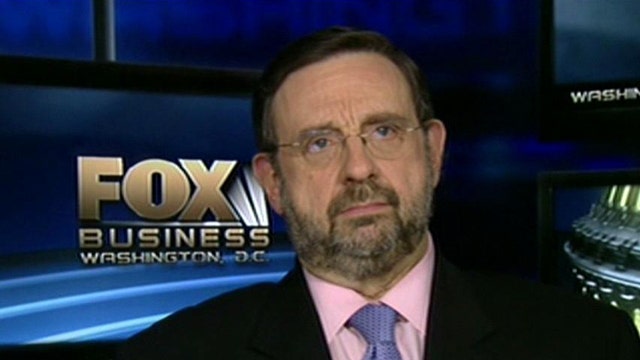
Harvey Pitt on DOJ Suit Against S&P
Details
-
Description
Former SEC Chairman Harvey Pitt on the Department of Justice’s lawsuit against S&P.
- Duration 4:46
- Date Feb 7, 2013
You're watching...
Former SEC Chairman Harvey Pitt on the Department of Justice’s lawsuit against S&P.
Also in this playlist...
Auto-advance: ON
Auto-advanceThis transcript is automatically generated
The government's five billion dollar case against Standard and -- shook the stock of its parent company McGraw-Hill.
Which lost 11%.
Of its market capital yes his stock was down again today.
The Justice Department claims that the ratings agency deceived the public by boosting some of those lousy mortgage backed bonds it.
What -- senator 2008 credit crisis but former SEC chairman Harvey Pitt.
Wonders why the government took so long to make its move and maybe more important why the only ratings agency singled out by the government.
Is the one that -- incidentally perhaps downgraded the government's.
Credit rating Harvey Pitt joins us now.
-- where incidents -- because as you know a lot of people are saying this reeks of selective enforcement that Wall Street Journal's lead editorial.
Paid back for a downgrade is that what's going on here.
Well it's hard to say for sure but it certainly doesn't look very good there are a lot of unanswered questions not the least of which are some of the ones you referred to David.
This is all about conduct that occurred six -- more years ago.
Someone has to wonder why it took the government so long to bring -- case it's as was so who clear.
Well you work with the SEC brought many cases did you ever have an instance where you have -- spends five or six years collecting evidence.
Well and I got to the SEC -- that was a normal pattern commission would spend five to six years.
And that's why -- instituted a program of real time enforcement.
One WorldCom have serious problems we were in court within 48 hours of discovering.
And I think it's important for the government.
To be expeditious.
And to show that it is being tough but in a fair way.
Well again that the question of so what activities import here too because Moody's and Fitch of course there's no hard evidence a case hasn't been made in court yet.
But they are it is assumed that they were doing very much the same sort of thing SS and why just focus on one company why don't -- why not go against all three.
It's very difficult to say.
I suppose one.
Appropriate reason would be -- that's the only place for the government thought it hasn't very clear evidence enough to get into court.
But after all of this time and knowing that all of these rating agencies were doing exactly the same thing.
This does not look good for the Justice Department now.
-- -- does look like selective doesn't let's just get into the case a little bit here.
This is this as one -- all of that they're using in building their case I think this one is from 2007.
And of course.
The key the government's case against S and S&P is that they sort of soft -- ratings.
Because they were actually being paid by the same people whose instruments they were rating and here's one analyst who said the fact is.
-- a lot of internal pressure and S&P downgrade lots of deals earlier -- and before this thing started blowing up at the leadership was concern -- forgive me this is in the note a pissing off too many clients.
And jumping the gun ahead of Fitch and Moody's so that's why they say they're bringing this case do they have a case based on mammals like that.
Bomb did very well could be because they -- -- none of the case is not that the ratings were bad that would be a hard case to bring although I think most people believe.
The ratings were bad rather.
-- cases.
That they Standard and Poor's purported to be independent.
And it wasn't independent so -- lied about its bios and its own conflict of interest.
That's an easier case I think to try and -- Harvey let's pull back just a minute look what's happening with regulations.
Not only those put forth by justice and SEC but by others.
There seems to be an attempt by by people in government to use regulations not to fix things.
Or to make us safer which after all is the purpose of regulations.
But to expand the power of the federal government is that a fair statement.
I think it is and then once said the statement this cases a classic example because you have.
One agency the SEC.
Which required.
Some of these credit ratings.
And now you have the government's saying these were credit rating shouldn't have been given and they were saying.
It's a catch 22 type situation.
Harvey Pitt to former chairman of the Securities and Exchange Commission -- good to see you thanks so much appreciate it to be with you -- --