You're watching...

Where is the Urgency to Balance the Budget?

Details

  • Description

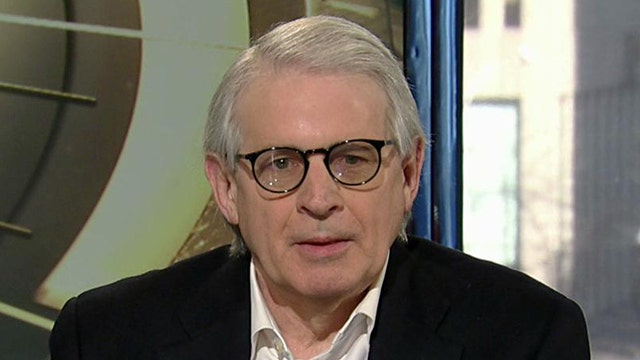
    Former Reagan economic advisor David Stockman on dealing with the nation's massive debt.

  • Duration 4:17
  • Date

Clips

Also in this playlist...

Markets Now

Auto-advance: ON

Auto-advance

Transcript

This transcript is automatically generated

Bring in David Stockman former economic advisor to president Ronald Reagan.

There's no urgency about an hour weeks -- we don't do something about our annual budget deficits and -- longer term debt that we're accumulating.

Is it just going to be kind of a slow drip.

Like where we bleed to death as a nation where we don't really feel it until it's too late.

Now I think guy you drift along until you reach an inflection point and then had flares up in -- uncontrollable.

Disastrous way.

So that's why I say this is a good idea this bill but they should be sending it to Bernanke to.

And his merry band of -- take money printers.

Because I believe ultimately they are the number 12 -- -- because in this huge fiscal stalemate in this disastrous budget drift that worry at.

When you tell the congress as the market is saying this morning which is totally medicated by the Fed.

You can borrow ninety day money for seven basis points which is a -- dare you can't even see it or three years -- forty basis points.

There's no urgency they will never fall on the sword there will never make -- hard choices.

And I'll never level and be honest with the public that we need both huge spending cuts as well as more revenue.

To get this deficit under control number two you don't have ten years.

If you take an outlook for the next ten years identical to the last ten in other words and -- rosy scenario what really happened which wasn't very good.

We're facing fifteen trillion or more additional deficits.

A built in national debt that would be.

Thirty trillion -- 150%.

Of GDP that's where we're drifting.

In this says but balance and in ten years you don't have ten years they need to get to it right now this year next year but with major cuts argument you're right about -- being forced to do it in the recent there's no urgency is because rates are solo.

When do you see that changing because.

I think as she -- at the outset he remarks it's.

Not a problem until it's a problem financing that we can predict when that you know that's exactly right Greece -- wasn't a problem until all of a sudden they couldn't borrow the market close not just because we -- issue our own money.

It doesn't mean that we can flood the world -- a hundred trillion.

-- the dollar liabilities.

Over time there are limits to all of this and I think the markets are beginning to get nervous are ready.

About how fared the Fed can go in this money -- and what they're doing right now 85 billion a month.

They're buying either of got a mortgage backed securities are treasury bonds that is totally artificially.

Suppressed in the market.

And I believe at some point they're going to -- be forced to stop.

On the flip side you have plenty -- Democrats do not on camera talk about.

This debts not a worry we're not concerned with it.

An article in the LA times last weeks -- our biggest economic concern.

Is not the debt and the deficit and then you -- then you have people pointed that weak economic growth during the fourth quarter where we went negative.

And again it was because -- government spending cuts and no politicians gonna let that happen even if you're on the run on a Republican.

Well then maybe true but that they're only reason we have even a semblance of recovery over the last three -- four years is that we've borrowed 45 trillion -- the tab on the next generation our children and the children -- -- And it is being totally artificial now at some point.

We're gonna have to begin reducing the deficit when we do the economy but will be weak that -- make the deficit challenge even greater it's a negative feedback loop.

Right now when all these Democrats say look at the market mr.

market is saying go ahead borrow we don't care.

That is not a real market.

That is the Federal Reserve -- -- building that's one side of Washington telling the other side don't worry I'm buying all the bonds now if you think this kind of Ponzi finance.

Is anything to do with capitalism or free markets or anything to do -- sustainability.

Then -- -- and economic textbook that didn't even exist in 1995.

You know.

Thank you what David -- I know it's like face less like the first few you get it's kind of hot your age but eventually your don't -- well 86 had thought of that way but.

I'm seriously you don't management a little aren't up -- -- -- long and then they extended.

To put.