You're watching...

U.S. Policy in Syria Making it a Target in Middle East?

Details

  • Description

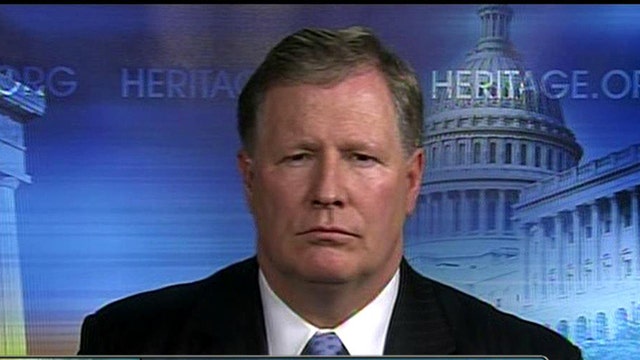
    Heritage Foundation Peter Brookes on the attack at the U.S. Embassy in Turkey.

  • Duration 4:37
  • Date

Clips

Also in this playlist...

Latest Video

Auto-advance: ON

Auto-advance

Transcript

This transcript is automatically generated

At least you're dead in an attack outside the US embassy in Turkey today -- suicide bomber.

Blew himself up in front of the embassy killing a Turkish security guard.

The White House describes it as a terrorist attack.

Turkey's prime minister is now claiming the bomber was a member of -- far left militant group.

So is the US becoming even more of a target in -- region I'm joined.

-- -- heritage Foundation's senior fellow for national security affairs Peter welcome back to the show what do you make of this.

To be with you.

Well as a tragic event obviously -- -- reminds us of the troubles that take are going on in that part of the world whether you're talking about.

-- Syria Turkey Iran I mean Middle East is a very important place and it's very volatile and we we need to pay attention to it.

It is -- out you know Turkey is that a popular tourist destination it's not one of the places that we think have.

As being such a target for Americans does this may be represent -- -- that things are getting even more serious.

Well look at -- this situation in Syria I think is related whether this group is.

-- we don't know their real motives this is still breaking news Melissa.

We know we need to learn more but my senses a lot of this goes back to Syria I mean this isn't something that's been going on for most two years more than 60000 dead -- How many -- displaced persons I'm not sure maybe a million herself.

It's rattling all of the governments in -- and that region and I think whether you say some people are saying it's related to this group is anti American anti NATO there American forces in Turkey to protect Turkey with a missile defenses.

You know it but that goes back to Syria once again they're trying to protect him from serious sell the policy in Syria I think it's been a failure as certainly failing and I think it may be in some way related to that yet -- begs the question what should we be doing differently in Syria.

Well we should have thought about that a long time ago and I and others have said there are a lot more that we can do short of putting boots on the ground going back you know.

Two years now I mean this situation is just getting worse and worse the Israelis were involved in in something the other day this said that the situation been spilling over the borders we -- you know early on we could have backed.

Some groups that we we thought would we could support.

That was critically important and then possibly arm them if they are the sort of people weaken support unfortunately we waited we waited we didn't have a good intelligence on what was going on in there we did you couldn't find out -- to back.

And right now we have this very important country.

In a situation that certainly may not go and our our direction we could have -- -- al-Qaeda is in there there are islamists.

The Iran is in there -- in there and I don't think we're shaping the future of Syria the way we we should be -- potentially could be even short of putting American troops on the ground so what would that -- what do you suggest we do instead I understand -- we've done wrong what would your recommendation be today.

Bob on the record I guess on this and I'll try to I would say things we should have we should have showed that shaped and opposition formed an -- what trains and how question to go against us on what what we do the same thing coming more weight.

We're -- behind the power curve so this is difficult there's psychological operations -- cyber operations we could be.

Recruiting -- you know the generals away from the from the Syrians and it is all sorts of things that we could certainly that we certainly can be doing in terms of in terms of trying to shift it and shape it now that's no guarantee that it's gonna go on our direction.

-- a look at the but the fact of the matter is is that being reactive I think is.

Is much less self fortuitous for -- then not being proactive so unfortunately we don't do those things where do you think the situation goes from here.

Think about it you got you know you cut chemical weapons that could go fall into the wrong hands.

You know we see what's going hot and North Africa in -- that could certainly happen and certainly happen in Syria.

You know the the war could it has already spilled over the borders in many ways but it could even get worse it could destabilize Turkey and and NATO a NATO allies and Israel -- in that part of the world than there are differences between Israel and and Syria Lebanon and I mean the future of Iran into Syria is an important ally of Iran in Iran needs -- sort of partners across the Middle East to remove its agenda forward.

You have other countries such as Saudi Arabia Qatar and air mean there's a lot going on I mean all -- of course.

And these solders -- began to anti American Melissa remember -- the rat lines have ran out of Syria into Iraq and you know was it that fought and killed American soldiers in the past so this is no friend of ours or read -- it but it's strategically located and we really need things to move in our direction and protect and advance our interest absolutely Peter Brookes thanks so much coming on the -- Banks have me sit.