You're watching...

Conflict in Middle East Means Bad News for U.S. Markets?

Details

  • Description

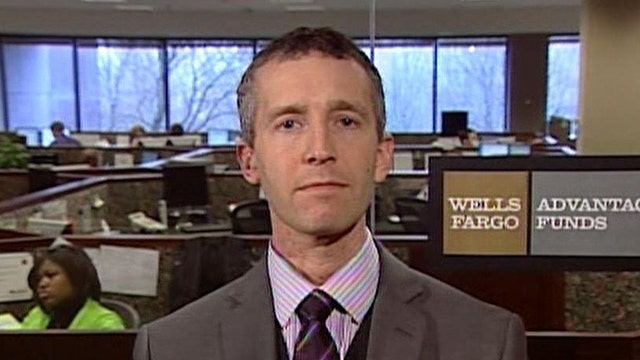
    Wells Fargo chief portfolio strategist Brian Jacobsen on how the Middle East problems impact the U.S. markets.

  • Duration 3:28
  • Date

Clips

Also in this playlist...

Latest Video

Auto-advance: ON

Auto-advance

Transcript

This transcript is automatically generated

Much in the call talked about the domestic -- concerns that are out there would be consumer confidence also the the housing number was pretty good but there's also trouble over there that may shake up our markets back here curfews failing to bring peace to the streets of Egypt.

The nation's army chief even out with a new warning saying the crisis could lead.

To the collapse.

Of the state.

To mess over there 52 dead and five days of violence opposition leaders say president Mohamed -- -- does not represent the goals of the Arab Spring.

Brian Jacobson.

Says investors here should be on -- she's wells Fargo's chief portfolio strategist and joins us now why.

Brian -- the problems in Egypt toward other places oversees directly translate do you think -- for trouble in our.

Markets.

Well one thing is that it definitely affect sentiment and we already saw the consumer confidence numbers dipped dramatically as a result of the payroll tax going out.

Whenever you have conflict in the Middle East -- -- to see a decline as well.

But a lot of it I think actually stems from some of the fear trade we could see treasury yields go down as result if there is some sort of blow up in the Middle East.

Also the price of oil let's not forget that the most of our oil still does come from the Middle East and as a result if there's some disruption in supplies we could see those drop prices go back up.

Yeah we're going to be talking later this hour about you know the oil that should be or could be coming on down the Keystone Pipeline as a kind of an alternative to going overseas for oil so I understand that's part of it but I'm skeptical.

That people wouldn't be just much more worried about things like that you reference at their paychecks are suddenly smaller.

Maybe even more than they imagine the beginning of the year with the payroll tax going up.

And that.

They don't really care so much about what's happening overseas that you think they do or should.

Well.

I think that it depends upon how widespread the conflict gets because if -- if it stays contained where it doesn't actually disrupt.

Any of the oil supplies then I don't think that investors are really going to didn't notice it much in the markets it's usually when it begins to spread where we let's say have a closed down.

All of the us was coming hours straight of Hormuz something like that where a lot of oil flows through so if we could be energy independence I don't think investors would -- much but we're not energy independence until we get there.

Investors will continue to notice and I think that they're gonna continue to be on the edge of their seats when you see some of this violent.

It's -- to give -- -- stock market outlook from where we are right now factored what you already said but also.

The consumer concerns that have been there with a payroll tax that you also mentioned.

The housing figures about jolt that -- we'll talk to us about -- -- this hour looks like things are getting better there so this -- stock market continue to advance 141000 plus on the Dow or is now the time.

When we might see a pullback.

-- what might we see a pullback or perhaps a pause I think that's that's what really the balance of risks there.

I'm not seen a lot of upside in the short term long term -- by the end of the year I think the I think he's gonna be closer to 16100.

And so as a result like fell short term -- some of the volatility treats an opportunity to actually -- into stocks I do think we might see a little bit of a pullback as the situation in the Middle East evolves and also we're gonna be giving the GDP numbers tomorrow the employment situation report we're gonna be really feeling some of the brunt of this payroll tax cut going up.

On the economy there's also of course the perennial uncertainty in Washington as far as what's gonna happen -- sequester and the continuing resolution.

Just always there seems like but your 15100 we take 16100 from here at 15100 now we'll -- primal obviously have got a lot -- -- -- if -- -- thanks for coming on today.

Thank you -- -- -- news.