This transcript is automatically generated
What his life sounds like -- plot of a comic book and computer mastermind turned global disease fighting hero.
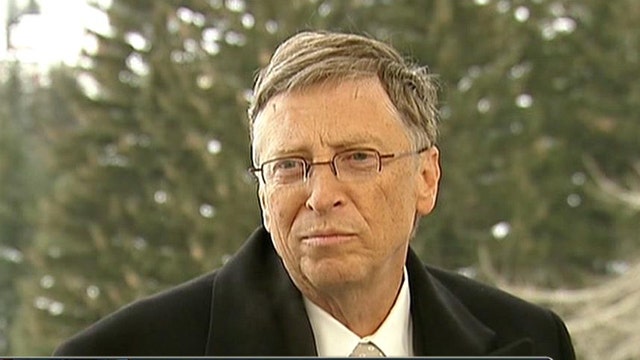
We're talking of course about Bill Gates at the World Economic Forum in Davos Switzerland -- -- asked the man behind Microsoft in the Bill & Melinda Gates Foundation.
What started -- crusade to help those in need with the help of the global -- -- there was an -- emergency.
Where.
People in the rich countries we're getting access to the medicines that -- saving their lives but most of the epidemic was import countries and so the question -- These medicines that only cost a hundred dollars per year.
Would the Africans.
Die because that generosity wasn't available so global -- creative about it also took on malaria and tuberculosis so three.
Of the big killers and the -- -- global fund has been pretty phenomenal.
They've been able to raise.
Bit over three billion dollars a year.
That goes by those drugs.
And get them out for the the very poorest countries.
Bill they eat what you mentioned vaccines and I wanna get to that because that's preventative that saves a lot of money down the line does -- not.
That's right and for any disease we have a vaccine like -- measles or polio.
The key thing you need to do is simply get it out to everyone.
For the three global fund -- we don't yet have.
A vaccine although that foundation and in the US government another term -- very heavily because then we finally stop people from getting in fact.
Could well see that's the second we take for granted in the US and in developed nations that our kids just on the calendar with their pediatrician.
Get vaccines.
Can give me an anecdote because you've traveled the world to -- poor nations where you saw.
Something that really tugged at your heart strings where he thought we could really make a difference.
Well in import countries we still have about 400000 kids here who died measles.
And there's a great measles vaccine it's simply that the health system there isn't getting it delivered.
And so.
Good global alliance for vaccines works.
To get that coverage level up.
You know and measles -- where it's at twelve cent vaccine.
That shouldn't happen it's just we're just not treating those -- lives -- as having enough value what is the number one way you feel we need to change our approach when it comes to battling diseases.
Well we are making progress -- so it's an incredibly positive story.
Back in 1990 over twelve million children under five died every year.
And now that's down under seven million.
And so this is a good news story.
We need to -- intensify the amount of research we do to invent new vaccines.
We need to increase the resources to buy them for the -- children.
And then we need to improve the delivery system to get up from seventy.
Or 75% we get today.
To get the -- Those are the three things -- -- get that child to death rate on getting down almost zero.
People say.
We need to take that money and focus it on our own territory our home why are we giving to the Africans we need it in -- what is the logical response to that that you have.
Well we're saving lives with this type of aid for less than 2000 dollars pro life saved and when you do doubt.
You reduce the sickness.
Parents choose to have less kids and so the country could become self sufficient.
So if we believe.
These lives are even worth 1% of what we'd spend on that people living next to us then that generosity is not what we should turn to.
As we're trying to cut the budget for 5%.
You know it's less than 1% of the budget.
And yet in terms of impact per taller.
It's far greater than anything we spend domestically how is it that you didn't become a doctor scientist it seems like you of.
Always been fascinated with biology and the human condition.
Well broadly into some science so actually writing computer software as the thing that.
Drew me and I got to be early in Manhattan and do a lot of work there.
I noticed -- Nadine and now the foundation I get to back great biologists to once for inventing these new vaccines that I sit and talk -- about.
And the approach they're taking in and so it's a big part might work now is.
Sitting with them.
And making sure they're they're moving as fast they can and that -- -- supporting them why is it's so important for you.
To spend as much time as you do working on the so called second life of Bill Gates.
Well I'd I'd say partly I enjoy it but I think it's important work and -- to do the work you've got to.
Goaded Nigeria.
That's one of the three places we still -- -- on C -- what's not coming together.
You know and can we -- satellite maps to find out where all those cuts are okay.
You know what is it it take to get that done will be watching that as we finish up a couple of bits of of news and and other thoughts Microsoft's earnings -- out yesterday.
Sixty million copies of windows -- are you satisfied with the number well would've dated says foundation for the future the way they've built touching and the way they have the application -- talked to quite a good start and you know making sure they have more the best applications more applications.
-- -- there are really good trajectory well there and a lot of -- for now.
It's -- it'll last I spoke with you we talked about a tap what you were using these at Samsung galaxy is there an -- book that you're using right now -- you think is great.
Well hate Microsoft tells the surface that's quite nice and it kinda gives you the benefits of the tablet because that stand the light.
Just folded up but it also gives you the benefit.
Of PC because about the stand the keyboard and so it's really taking the dilemma.
-- tablets hot right -- PCs not right.
Gives you the best of both worlds to -- you're -- guy -- and your wife had said she does not letting the kids use apple products is that through my never asked so -- I don't up.
-- -- interest -- -- they did ask that they that they love their Windows -- they love their windows PCs -- always the Microsoft -- Mr.
gates it's a pleasure to have you thank you very much.