You're watching...

Merck CEO: We Need a Strong FDA

Details

  • Description

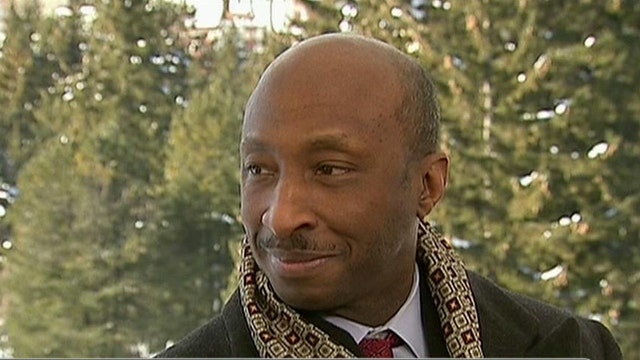
    Merck CEO Kenneth Frazier on innovation in pharmaceutical industry and the impact of the health-care law and regulations.

  • Duration 6:18
  • Date

Clips

Also in this playlist...

Latest Video

Auto-advance: ON

Auto-advance

Transcript

This transcript is automatically generated

Somewhere in your portfolio.

Or your 401K you probably -- -- pharma stock one of the largest is now saying the number one thing on its list.

No matter how affordable health care act affects it is.

Big spending on research and development.

CEO of that company of the World Economic Forum in Davos Switzerland.

If I would tell you that you could get the glory of creating a lifesaving drug but it would take you a minimum of fifteen years and a billion dollars.

Would you still do it.

The people at -- do it every single today I'm joined now by the chairman president and CEO of Merck.

Ken Frazier here in Davos Switzerland good to see you thanks a half million the elect that -- -- -- was fantastic really describes what we're all about.

Well let's talk about drug development because of right now there are bunch of questions swirling around it from the affordable health care act and whether it's going to -- innovation.

And needless to say the generic -- where they snatch what you guys have worked so hard to make but.

-- it to happen anecdote to talk about to let our viewers really understand what it means to work hard to develop -- truck.

Absolutely -- number of them but the one that I'll think about our art China share with the viewers this.

The drug that just went off patent is a drug called Cingular for asthma and allergic right -- The company worked on that molecule for more than twenty years before it reached the market.

That it was an incredibly important innovation among other things it was a pill that was incredibly useful for children who need a mild but effective drug.

That lists is a Blockbuster drug for -- five billion dollars and cents for gas but now it's just gonna happen in the United States and so what you do to replace that to fill that void in your pipeline now.

The nature of our businesses that you either innovate.

For you become extinct.

And so for -- it's really about the new drugs that are coming along that are gonna take its flights out for example we have.

A franchise in diabetes now she knew PSI leading drug.

Then it's a fabulous drug it does a great job of controlling blood sugar but again it's differentiated from the prior generic drugs because it doesn't cost weight gain and that's important to people.

Who -- going to be on diabetes she.

For a long time which is of course one of the biggest chronic diseases that affects our nation and cost so much.

You know the cost of everything people do wonder about about the drug cost structure how to bring it down to stupid does the affordable health care act.

Do that in a way that you can also live with it.

Well we had to give additional rebates to make -- Affordable Care Act work and I think that's a trade -- that's worth it because now.

More Americans have access to really good health coverage so we'll take that trade off any day.

You're part of a panel here -- Smart regulation in fact it's.

What of the panels are there are many that that you really understand the actual title it's not -- came in detail but what is Smart regulation to you its regulation targeted at avoiding risks but not so much regulation that it.

Impedes innovation.

So our country recently we had some issues with respect to the compounding of some drugs and some people got terribly sick.

We don't want a world in which patients have to guess whether -- medicines are safe.

We need a strong FDA at the same time we want to avoid excess regulation that drives our legal costs and things of that nature what country does it best -- -- Actually I think the FDA has the gold standard worldwide you know we Americans.

Sometimes complain that it's not perfect but I think we have the overall best.

Food and drug regulators in the world whose second how about that.

I think it's I would say Japan has a close second and in -- frankly we're getting drugs approved to move faster now Japan and we on United States.

So you've got two new via you've talked about to get Blair is there a drug that you're looking at that you think he's going to be the next Blockbuster for you or is on the way to getting there -- -- -- three.

I'll talk about some real quickly we haven't drug now and -- late stage development for all time.

And you know alzheimer's costs our society 200 billion the alzheimer's society suspect 2050 if we don't do something it'll be trillion dollars so we're very pleased to have a drug that tests the dominant hypothesis which is called the amyloid hypothesis it should -- the disease process and we've really high hopes -- that.

Boy you sure don't sound look at death penalty lawyer he was -- death penalty lawyer before you got to -- That's correct what was that like well you know I see similarities because people who do -- -- are committed to their fellow human beings and it's really a mission driven activity.

-- -- -- -- -- -- I driven activity.

Well how to get from that go to -- is my question.

Well I was working for a law firm that actually represented -- at the same time and then CEO wiped out to -- hired me and that's how I customer.

-- you know I I look at the fact that you are a lawyer by trade what surprises you most about the pharmaceutical industry.

Well I would say what surprises me most about the pharmaceutical industry is just the level of dedication that the people.

You talked about.

That the long lead times have you haven't development and we have researchers as you know.

Who started projects when they had infants and those projects only come to fruition when their children are about to go to college.

That's extreme dedication.

And yet people but still feel that the pharmaceutical industry can bring down the price of pills you know during a recession.

We -- we seen studies are people break their pills and have to make the -- surely you know about that you know that's that's out in a way is there anything we can do to to change that.

Well I think it's our obligation to price new medicines in accordance with the value that they create.

And I recognize that we have to do things to ensure that people can't afford them get them so we have things like patient assistance programs but we also have to recognize.

The impact of innovation on society it.

It's a huge thing when you have cancer patients who no longer have to take chemotherapy they can take a pill.

Ken Frazier is chairman CEO and president of Merck.

And -- fifteen years -- ready to work fifteen years to make what your dream is come to fruition be watching that very closely thank you so much thank you this happens it's a pleasure.

We will said that all the way back to New York.