You're watching...
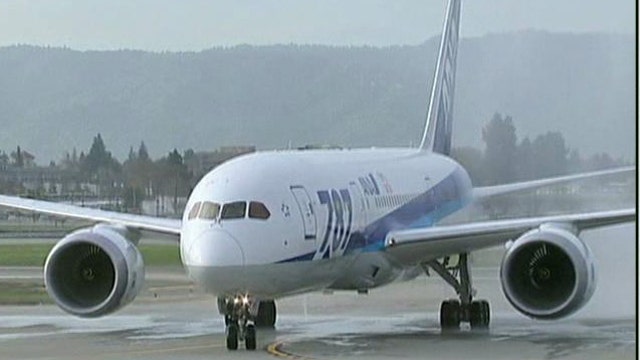
Can Boeing Regain Customer, Investor Confidence?
Details
-
Description
AirSafety.com creator Todd Curtis on how the battery issues will impact Boeing financially and as a brand.
- Duration 4:43
- Date Jan 17, 2013
You're watching...
AirSafety.com creator Todd Curtis on how the battery issues will impact Boeing financially and as a brand.
Also in this playlist...
Auto-advance: ON
Auto-advanceThis transcript is automatically generated
-- RE turning out -- not so friendly skies the Boeing dreamliner becoming a nightmare.
As the FAA temporarily ground all 780 sevens operated by US airlines.
It is the first time since 1979 of the FAA has done this and get this the US has -- -- accompanied the European Union.
And some foreign airlines have now done the same thing.
It is because of safety concerns tied to batteries Boeing uses in the plane.
Question can Boeing get back lost consumer confidence after this Todd Curtis is a former -- safety engineer and creator of air -- dot com.
Todd thank you so much for joining us I mean let's what the problem here.
A lot of people -- -- those lithium ion batteries and there's been problems with them bursting into flames as -- in cars as well.
Is that media potentially flawed technology.
It's a different kind of technology from the batteries -- used before it has some challenges one of them being if it does catch fire.
It produces its own oxygen so it's very difficult to put it out.
But they're designed changes are put in place to vent smoke overboard there -- other changes that they made to make sure that this thing doesn't happen apparently those changes -- enough.
You know last week when we solve whatever was six -- stances on six planes and five days whenever the incredible staffs work.
A lot of people tried to slop that -- is all this is what happens when you roll out a new product.
It seemed like too much now the FAA is the stepping in and saying hang on let's ground of these things.
Are the over reacting are they doing the right thing do you think there's a real problem here.
I think there are things that we just don't know about yet for example after the event in Boston last week.
Immediately NTSB had a fairly serious investigation that involved the Japanese equivalent -- the -- And -- said to me that perhaps they had some inkling there was a problem to battery system.
And what happened in Japan later just sealed the deal as far as serving a much more serious approach to this.
As a passenger this makes me really nervous about a 787.
Do you think they're gonna be able to get the confidence back for flyers -- if they straighten out all the problems how would you go about doing.
I think the key here's -- -- typically when you have a problem and a new aircraft model like this or even an existing model.
You have a team the manufacturer.
Of the certifying organization in this case FAA.
The NTSB.
And others including the Japanese who worked together on -- solution.
And if that solution is son the one that's actually affected.
And if they're very transparent with what they're doing and how they're doing it.
I think public confidence will return act like a long process how one -- these plans are going to be on the ground it's hard to say.
Until they understand exactly what happened until they understand what role if any of the battery played.
-- we know could be much more Sobel Communist or it may be days -- may be weeks.
And they had there were a lot of delays when they were rolling out this aircraft and that was a sort of look source of lots of consternation for shareholders for the industry.
Do you think they rushed based on those -- -- and you think that the delays have anything to do with what we're seeing now.
I don't think missiles Russian -- aircraft development especially when that as many new technologies as this one.
Is one that has uncertainties and and along the way when there -- uncertainties when their problems.
They've made sure that it was fixed before they moved on the certification.
So yes a little it was a little longer than usual but not when -- had worried about.
You know -- -- safety engineer for Boeing bit how.
Scared should we be how big of a deal do you think this -- and what's your assessment when I said last week at this is I -- this is really scary people said no no no.
Now I I feel like they let me astray then what do you say now is this scary is this big deal.
Well first -- I was with Boeing I was -- -- during the triple seven development I didn't.
Stay with the company during the 77 development but.
The process is similar.
They're things that happen.
Sometimes amazing moment scares the outsiders who aren't in on the process but there's a very very deliberate process here.
That that takes a year's not just during this phase but as long as there is this aircraft is in operations when you get.
One of these aircraft today if they let you I know they're not letting you but if they let you would you do it.
If the FAA and vehicle -- authorities over in England and in Japan all say hey we have a solution if Boeing.
Gets on board -- -- solution they implement that I did not -- your trust everyone involved even though they are cleared and said it was safe before and -- what's.
Well it may be safe now what it is is there's a risk that's now recognize whereas before two weeks ago we did know what that risk was once they do something about that risk.
Our perception of how safe it is we'll increase.
Okay I'm decline in the future for a get on one of these -- if it's a good idea I am still may not get on but I definitely.
I'm Whitney on speed dial -- that is how much -- right next.