You're watching...

Fisher: American Business Economy Ready to Roll

Details

  • Description

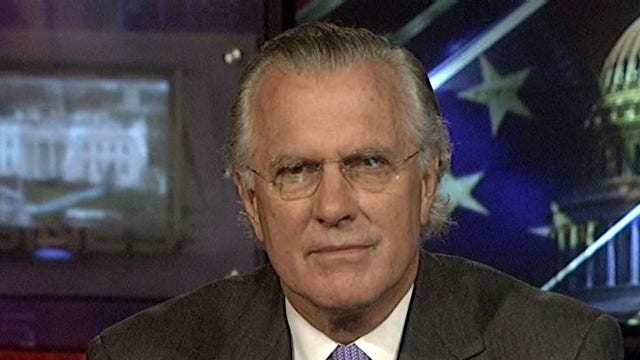
    Richard Fisher, Federal Reserve Bank of Dallas President, on why he is pushing to break up the nation’s biggest banks.

  • Duration 10:32
  • Date

Clips

Also in this playlist...

Latest Video

Auto-advance: ON

Auto-advance

Transcript

This transcript is automatically generated

Talk more in fact we have Richard Fisher now Dallas fed president Richard Fisher is one of the most outspoken and forward thinking members the Fed reserve.

He's just come out with a maverick proposal that would dramatically reorganize the banking industry in fact some see his proposal as a way to ensure.

We won't have more taxpayer bailouts of millionaire investors he.

Here to talk about this proposal and about the economy in general Richard Fisher good to see and about the market let's start -- With -- news the market had a great day today -- the S&P 500 is.

-- is close to or or at a five year high now why is the market doing so well.

Even though the economy is still kind of -- -- slow move.

Have donated.

-- explained edited news and market matter how hard we try and -- manic depressive medium.

But markets do tend to discount well in advance of what we mere morals -- able to do as individuals.

And one can infer from a good day in a market some things other times you're not quite sure -- so I.

I'd be hazard -- guess I have no idea what.

Form so it has it been the intention a lot of people have speculated about this folks from the right street journal John hills and graft and others.

That it's the intention it has been the specific intention of the Federal Reserve over the past year or so to pump up the market is that true.

Well clearly this is an effect.

Having much lower interest rates do you can do the math and it.

These historically low rates are.

Corporations in America where -- public -- private larger small.

Or medium -- have a very strong balance she's now they've read.

Underground she saved reposition their data much lower prices so.

We do have David and disappoint I think support to make this American business economy is greater role it could just get some clarity.

As you know -- -- -- times a little more -- a lot more clarity from the fiscal authorities as to.

But the cost of doing business is going to be and how they're going to be regulated its -- They've got to fuel now and they've got plenty of fuel our target out that too much -- that we we -- the Federal Reserve are done so much I think a little bit too much but.

That's a fine point the point is -- about she -- better shape.

They're hyper productive you've been reading today about the fact that our manufacturing businesses can compete heads up according to many articles with the Chinese and so on.

We're ready to move if we could just get some clarity from the fiscal authority so that maybe maybe I -- that may.

-- being priced in the markets now but I don't know and I never know what market's moved.

Today -- -- what you you're were reluctant just mattered to criticize the Fed's recent policies of of buying up a lot of treasuries and other instruments but.

You want to -- -- yesterday to say so when a speech -- gave you said.

Accommodative monetary policy talking about putting more money to buy more bonds and government policies have failed to adequately affect.

The economic recovery failed is a strong term in what way.

Has the Fed failed to help the economic recovery.

Well I'm not sure we have.

Fail to that's too strong a word that's that's the word new unit Richard Myers ordered played -- -- -- throwback dignitaries -- yeah Nicosia -- the FC what we're doing is.

Again we don't have control over this thing to agree that.

Some might want to see we provide to fuel.

But people have the incentive to use it and in terms the one area that many -- are always concerned about affect everybody and -- committee.

And of course time -- -- -- -- we don't see inflation occurring right now what the real question mark is.

The efficacy with which were able to affect employment and that as part of the mandate given to us by law we have to operate under if that's what the congress demands of us.

And on that front I don't think we have probably if I know we haven't gotten results and I would like to see.

And we have to continue to test that assumption or whether or not we're doing the right thing in -- -- affect higher levels of employment I don't personally think it'll work.

The last we get the cooperation from the political authorities -- set taxes how much they spend and how to regulate it.

And by that I mean is a negative comment on -- I mean it just is not sufficient it's necessary but not mission David -- what I spoke about last I was about the banks and not about monetary -- All right when we're gonna get in the banks -- just a second but there is -- a conflict that some people say with regard to the Fed's interest in.

Popping up the market if you will and with the unemployment man -- of the employment mandate that you just mentioned sometimes as you know stocks go up.

If companies lay workers off that happened with American Express -- happened in the past with other companies Bank of America etc.

So isn't if if the the intention of the Fed.

Is to pump up the stock market doesn't that sometimes conflict.

-- its mandate to keep unemployment low.

Japan's -- are all kinds of approach to this David one Imus is so -- wealth -- -- that is if stock markets go up then.

The people who are holders whether there through the -- pulls a mutual funds or more directly.

Obviously feel wealthier and will be able to spend more and pop up consumption -- consumption driven society.

Others might argue that it's a narrow or base and it used to be.

So now it's a give and take their pros and cons to every single argument their costs and benefits every approach.

But clearly our corporations those especially that are publicly traded have been able to recapitalize themselves -- -- better position.

But they're not gonna use it David that financial strength to hire more people.

Until they get clarity and more certainty as to what their tax so be what the spending -- going to be.

And how they're gonna be regulated and to what degree regulation can be rationalized yeah that's not in the power of the Central Bank has -- -- power the Federal Reserve whether you are.

A banker like me in that system more member of the border governors are part of the open market committee as we all are.

It's really in the power of our elected politicians and they've let us now.

Okay well specifically with regard to what the banks are doing in the lending category I think everybody would agree they're not lending as much as we would hope that all that pumping into their system.

Would have done that's that was one of the prime intentions.

Of the Federal Reserve been in -- money was to get them to lend more.

Part of the that the problem has to do with whether the way in which this this new Dodd-Frank system -- banking regulations has been structured and you actually.

Say that on balance.

Dodd-Frank has actually made things worse.

-- -- They have higher concentration in the banking industry to top twelve bank holding companies I have over 68% of the assets in the industry.

And what is -- -- it's also layered an enormous amount of bureaucracy and -- filing in regulation on a smaller and medium sized banks.

Which are in terms of the numbers of total banks 99 point 8% of banks.

Are the ones that are being.

I think personally think overburdened by some much of the complexity.

Of this massive legislation that has occurred which we are only as one of the regulators.

Part of the way through.

In terms of -- -- -- the law requires of us to do with the Central Bank along with the other regulators so.

There's a question of fairness.

There's also really the objective of the legislation -- to -- too big to fail and we know -- it's in the preamble.

I don't believe that has occurred and I do believe that the very large institutions.

Operated today subsidy under the assumption they will never be allowed to fail there are systemically important.

You know at the other 99 point 8% -- They're they're too small to -- and the FTSE goes in -- Friday usually comes out out -- London avenue ownership structure.

The system works it does not applied to the point 2% and my simple argument last night was.

We had this huge haggle over the 1% on the tax front and filing was resolved maybe not terribly -- liking.

Certainly we can figure out a way to more efficiently resolve dealing with the zero point 2% of banks.

That are considered too big to fail what the -- -- -- not -- -- not victimize a smaller banks which number 5600 or so.

That that are put -- disadvantage -- that.

Actually the Federal Reserve as a lender of last resort was meant for the commercial banks not for that the high flying financial institutions right how do you.

How do you do that without going back to.

To the old rules of Glass-Steagall how do you kind of separate out those high flying investment banks from the commercial banks.

Well again I only speak for that -- Federal Reserve Bank there are different views on this subject matter but our proposal to Nelson's very simple.

And that is to provide for the assurances that we provide to depositors this is on the taxpayers back.

Only would apply to the commercial banking operations of -- the large bank holding companies attorney bank holding company.

And we would only allow -- that.

Specific commercial banking operation that is where they take.

Short term deposits from the taxpayers are guaranteed by the American -- take short term deposits and intermediate to make longer term -- traditional commercial banking.

Only that would be protected by law in terms of the guarantee on deposits and only that -- operation would be allowed to borrow from the discount window at the Federal -- that going back to Glass-Steagall.

Well it's not because of these large bank holding company institutions also engaged in other kinds of business they can be insurance securities and all these other things derivatives and special investment vehicles.

It has to be made clear.

That any customers describes on -- -- to their business has no.

Insurance whatsoever from the tax turn actually would while sign a simple short form was 3% and yesterday -- one paragraph -- -- -- can understand and read it.

And I would simply say that this money is placed at risk will not be underwritten or guaranteed by the United States government led by US taxpayer that would be quite a change I have to catch up getting a -- from the producer but will the Fed continue to print money and buy bonds beyond 2013.

I think the committee asked to make that decision and all those who argue -- -- -- you know I've been very reluctant on that front.

But that's a decision made by the committee I want to conclude one thing David please after that speech last night to our surprise and delight.

The Dallas -- website was so overwhelmed with requests for -- in a speech in actually broke out.

So that the speech on the banks I think particulates independent and many small and medium sized regional size banks.

They're very much supportive of the view we've articulated now it's really up to the lawmakers to take all the different perspectives here in sector -- a way to make Dodd-Frank.

Less onerous less complex simpler and more effective in preventing too big to fail.

Thanks for letting me say that absolutely Richard we appreciate you coming on Richard.