You're watching...
How The U.S. Can Avoid a Credit Downgrade
Details
-
Description
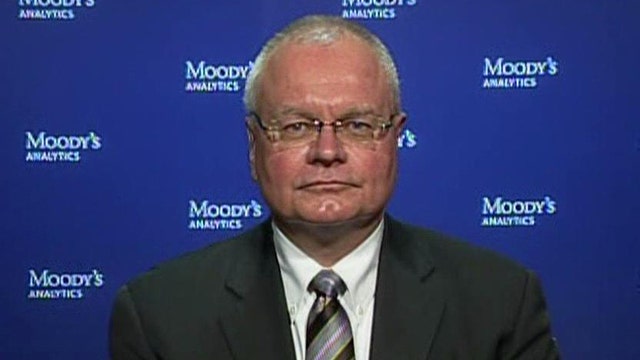
Moody's Capital Markets chief economist John Lonksi on cutting the U.S. credit rating.
- Duration 4:00
- Date Jan 3, 2013
You're watching...
Moody's Capital Markets chief economist John Lonksi on cutting the U.S. credit rating.
Also in this playlist...
Auto-advance: ON
Auto-advanceThis transcript is automatically generated
Exchange -- another issue that really can have a big effect on the markets.
In the future is the United States credit rating we've had this warning from Moody's -- the more action needs to be taken.
In Washington be on the fiscal cliff deal that was passed this week this if we -- -- avoid a downgrade John now -- joins us he's chief.
That Moody's capital markets I know John you can't speak.
A specifically.
To what Moody's might do on the credit rating -- get out that Al there at the beginning but that said it's a very important issue.
For you to look as economists.
Or is it how important is -- that we avoid a credit rating downgrade again.
Well.
-- would rather see the US avoid a credit rating downgrade and are currently the only way they will be able to -- that.
Over another unspecified period of time.
It is grew more progress in terms of -- -- deficit reduction.
That why telecoms probably.
Will require.
Ash -- effort at reducing long term government spending now as far as we caught in the credit rating.
Up it may or may not matter S and -- cut the AAA rating of the United States last year.
-- financial markets to the US did quite well bond yields move lower equity prices rose.
Not too long ago Moody's cut the triple B triple A credit rating up France.
To a double -- one which is still -- very very high quality rating and yet French government bond yields fell.
Had the French equity market moved.
Significantly higher.
This is the issue that I think is really maybe the most interesting and that that we've.
Been debating here for the last however long -- the people say.
Or when Washington get its -- act together and really cut spending and you know usually our answer we talk about it here is.
When they're forced to when they have no other choice when the you know what bond rates when the bond yields start to shoot up on we have higher.
Borrowing costs but we can't predict none of us can predict when that what happened yet.
And -- you have a sense that -- that because otherwise they'll never they'll never do it right because you're at the brits actually went down last time that they were we were downgraded which is which is a crazy.
And here's what's complicating factors.
And that is quantitative easy yet.
No longer does the market necessarily.
Set treasury bond yields.
Rather.
It -- it is the large scale body.
Of US treasury bonds by the Federal Reserve that seems to be putting a ceiling.
-- treasury bond yields -- not giving.
Treasury bond yields direction so when the Fed officially runs out -- when -- it.
We've because we've been asking this question for too long too but runs out of bullets so to speak today and we're in trouble but you don't have any sense to you when that is or maybe no I think the Fed is going to continue yeah.
To purchase treasury bonds.
As long as the labor market is to slap.
To the satisfaction of the Fed as long as the unemployment rate.
Remains significantly above six point 5%.
The Fed keeps buying treasuries and unfortunately.
That may have the undesirable.
Back.
Of nasty disguise sending a very important deterioration.
Of the US is budgetary.
Situation.
Which is a -- -- -- -- -- but again this is the key point people should take away from what John just said -- Wanna know one wash it'll start to cut spending is -- about all -- politics that we always talk about.
Watch the bond market -- ten year notes -- thirty units with the yields shoot up then they'll do something because they'll they'll have to but John Lonsky thanks a lot -- always.
Got one -- -- -- -- we're making quick hits to find yeah it'll look look at the equity markets in which writing the equity market -- Could care less about the lack of progress at long term deficit reduction you're absolutely right -- the huge rally -- to dot John Lonsky.
For Moody's okay America it is about to be -- --