You're watching...

Morici: Fiscal Cliff Legislation is a Bad Deal

Details

  • Description

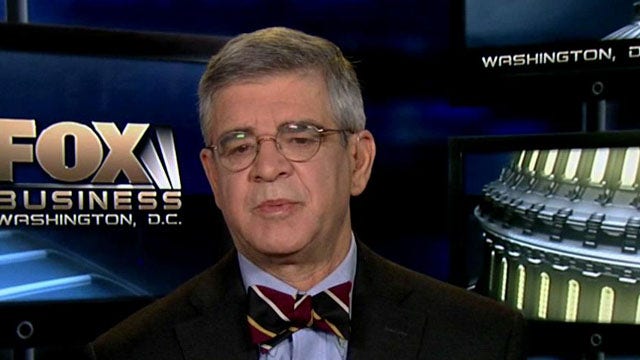
    University of Maryland economist Peter Morici on the deal reached to avoid the fiscal cliff.

  • Duration 4:51
  • Date

Clips

Also in this playlist...

Latest Video

Auto-advance: ON

Auto-advance

Transcript

This transcript is automatically generated

Five -- -- in the fiscal cliff deal now just needs that signature from the president but what lasting effects will the agreement have on the US economy as well as American taxpayers.

Joining us live from Washington DC -- University of Maryland economist Peter -- reaching and a good morning to you -- so.

Seems like a victory -- at least for people who want to cut taxes because now the bush tax cuts.

Have been made permanent for most Americans is this a good thing is is a bad thing.

It's a bad thing the Republicans have broken faith with their constituents by going along.

With tax increases that's what this comes down to and not obtaining any spending cuts.

People don't look closely at the budget recognize now all that's left -- spending cuts and the Republicans have given up their biggest -- this has to be looked at strategically.

This is essentially.

Lee's army retreating to happen -- by the time mr.

Obama gets done with the Republicans in 2013.

There won't be an agenda to vote for.

So when we'd start talking about the spending cuts because they've delayed that it seems as if we've just I think one metric I saw.

Added 620 billion to the federal revenue with the ability to spend money and we're gonna cut fifteen billion that's it fifteen billion.

From our deficit and -- -- and we're approaching twenty trillion.

In national debt by the end of the Obama administration anything on the horizon the deal -- better we just ignoring it.

No the president's.

Will come back again a lot more tax increases from the wealthy remember.

His colleague in France as opposed to 75%.

Tax on incomes over a million Euro.

My feeling is that he is simply unwilling to address.

The fact that it's not merely some sort of cutting spending or adjusting eligibility ages.

But we need fundamental systemic reform of entitlements you know if we increase every once taxes by 50%.

Everyone was so that's -- -- as a problem exactly we still don't cut the deficit and we only cut the deficit in half.

Let let me answer this question -- we have promises from congress to cut spending we have promises from the present cut spending.

I had a guest on Melissa Francis is show who pointed out very easily you can check the record.

This government has not cut spending since 1954.

By any way -- outspending.

Since 1954 the United States government has.

Added added an added an added.

To its outlays why should that change now I -- it needs to talk to think a lot of people agree but why will change.

It won't change in Iowa either that -- the senate majority leader came out what his great deal is that you know I know we're gonna tax increase is today but will get those tax those spending cuts down the road.

He reminded me of when -- pop by you know as if -- give me a hamburger and day out gladly pay on Tuesday.

But with.

McConnell and now Boehner.

Tuesday never comes -- vote was -- Act of cowardice we could have gone off the cliff and then force the president to negotiate.

Tax cuts.

For the middle class -- by paying for with spending cuts in his negotiations with the president.

He saw that the president does and willing to -- spending cuts and look at.

You know people like senator Harkin who who just don't seem to understand.

That entitlement spending it's gonna go up another trillion dollars a year and more by the end of the decade.

And at the pace that we're going -- we're gonna have to entirely cut the Department of Defense.

Or we're gonna have to shut down all domestic programs or out of this.

-- here I think the worst question you can ever ask is who wins in these situations that the political game I think matters to only a -- around Washington but I do wanna ask you this question based on this.

We've got the president now in his second term he'll be you know re inaugurated and few weeks.

This economy becomes he is economy he no longer brain blame.

Previous administrations and if what I'm hearing you and other economists say is that we're on -- course to hit the rocks how does the president explain that if that actually happen.

Well the last for fifteen billion dollars in additional jobs creation programs and he won't call them stimulus spending.

And the congress we'll see you have to pay for them -- though -- -- stalemate on that and they don't get all wrapped up in in the fiscal -- negotiations sixty days from now.

And that when the economy -- they'll say well you know I've proposed.

Additional measures to create jobs and the Republicans in the congress.

Stood in front of them -- -- to call Ronald Reagan the Teflon president.

Yes this guy is the alibi president he is the master -- bet -- if he tripped on -- -- this weekend at Camp David.

He would blame it on President Bush leaving it behind -- There ratio let me give you the last word on this morning happy new year and appreciate your being here when those very early.

-- really -- media all of you thanks very much thank you Peter we're going to.