This transcript is automatically generated
Are -- Goldman Sachs CEO Lloyd Blankfein just one of the CEOs set to speak with the president within an hour's time on the latest details on the fiscal cliff tax.
Financials as a whole this sector -- on track for its biggest gain in nine years so what remains ahead for financials.
And what is at stake for its stake for the industry with.
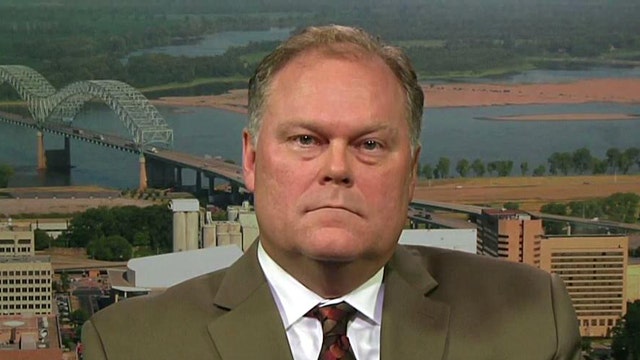
-- -- fiscal cliff looming let's ask Marty most be Guggenheim large cap that bank analysts let's start talking start talking about first Mardi.
We're hearing that Lloyd Blankfein will be on the call talking to President Obama.
Probably trying to garner his support president the president is out of these CEOs but.
Give us a sense for what the banks are looking for -- any sort of negotiation.
On Capitol Hill as we proceed towards a class.
Well the first thing that the banks would would like to see.
Is some you know at least some certainty and stability about how we're gonna you know get through this process and come out the other side.
Because as we're looking at either.
Cutting spending or raising taxes those have impacts on the economic.
Activity that these banks are gonna be participating in.
So some conclusions on some certainty well let them -- understand and prepare for what's gonna be over the next three and a twelve months -- Are getting more -- here more departures out of the White House senate majority leader Harry Reid -- right now as a remember coming in out this conversation with the whatever news we have.
You talk about regulation and things at impacted big banks to me what is your outlook for 2013 given.
We have a lot coming down the pike in -- way out about more rules and potentially more cost for this industry.
Well you know what -- looking at regulation we've been in a process.
You know since -- -- to financial crisis of adapting to new regulation.
The banks have been able -- you know double their excess capital.
Improving their their overall base of capital to the point now that 380 even meeting.
The Basel III guidelines for the most part.
When you look at the stress tests in the -- -- there were no vote that would march we'll see that they've been able to -- -- their balance sheets.
David -- to build capital so that we can begin to pay out.
About twice as much of -- in incremental earnings that we had this last year.
You know what you look at liquidity we've been able to build liquidity on the balance sheets as well as deposit growth has been very strong.
So for the most part what we're looking at a regulations forcing the banks to -- to improve their balance sheets and overall risk positions.
We've accomplished.
Most of what we have to do they -- A lot of what we're -- a regulation is operationally oriented and while it will impact expenses we believe the overhang of the credit.
As it works out and we've -- that the last couple Beers will release a lot of those expenses it will see those efficiencies starting to build next year.
And let me ask you Marty I mean I'm seeing JPMorgan up 32% this year Bank of America -- doubling this year was it that people.
Over sold the stock -- that the actual fundamentals justified the price movements this year.
Well we -- -- eleven you did see some pressure on the stocks.
As we went through the last financial crisis so going into the twenties well there was room to recover.
We saw that early on in the year.
Boy -- as the fundamentals in the sense of earnings power continuing to grow 20% this year.
We think that we'll have another fifteen to 20% growth and earnings power next year so the fundamentals are improving as well as kissing up a rebound from the low -- -- we saw an eleven.
Marty must be thinking very much for being with us.
Good afternoon have a good -- right.
Are.