You're watching...

Debate on Federal Reserve

Details

  • Description

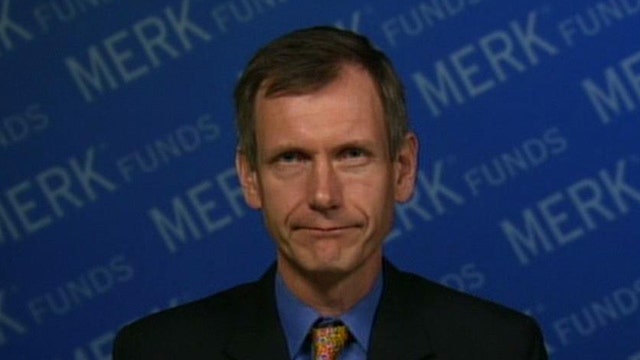
    Merk Investments CIO Axel Merk and John Lonski of Moody's Analytics discuss the Fed's announcement.

  • Duration 7:12
  • Date

Clips

Also in this playlist...

Latest Video

Auto-advance: ON

Auto-advance

Transcript

This transcript is automatically generated

Well thanks so much.

All right the Federal Reserve is we've been discussing extending its bond buying program -- 2013.

So they're -- -- the Operation Twist expire and then enacted new round of long term.

Agency backed bond buying -- expressing disappointment with the pace of recovery -- point eight.

As US budget talks heighten uncertainty about the outlook for the new year let's Axel -- cheap investment.

-- investments to weigh in axles great to see you here we've got.

These explicit targets right on unemployment and inflation but this is -- I wanna start.

We've had years now quantitative easing of record low interest rates since the financial crisis right what has -- done for the economy so far.

Well it has certainly helped the price of gold I don't know what it has done much other than that but let -- -- about why the Fed is doing that.

That the reason the Federal Reserve is doing it because at some point we going to get economic growth.

And we saw what happened to spring time the bond markets selling off the bond markets coming off -- hi -- -- which costs defender of Israel -- he does not want more which cost to go up.

And that is why he says.

Don't worry about it and economic growth has -- We worry about the unemployment rate.

If I get about the inflation target to focus unemployment now they do put in does this this this this.

Language here that showed inflation on the forward looking want to TS and go up to two and half percent they'll change -- -- but.

But that's a bad joke.

It's a bad joke because you need to have any energy -- anything indeed they wanted to yet inflation -- -- expectation that gonna gonna jump around and they do that to keep the market -- -- what they want this they wanna move away from focusing on inflation they wanna focus squarely unemployment and it's quite surprising they're able to agree -- -- quickly and on top of that of course we have without okay and another trillion on a daily basis.

Let's pretty John -- -- he's chief economist at Moody's capital markets' John.

You know they say they want to target the unemployment rate that implies that they think monetary policy is impacting the employment -- for employment at all.

Do you -- that.

Well -- would agree I do after all housing has improved that's led to increase in construction employment.

More workers are producing household appliances that in the past.

And plus the fact that benchmark treasury yields are so low this has.

Up prompted more businesses.

Two but -- on the risk curve because they find it somewhat easier to obtain reasonably.

He -- out where we're having the worst recovery we've ever had and we have the most activist -- we've ever had.

I -- -- I don't well you don't connection to what I mean on the fringes.

Maybe they're having an impact but it is not like housing has had a booming recovery as a result of their policy -- -- tons of people are back to work.

-- you're talking about on the fringes.

You're you're you're absolutely right but without the Fed's assistance we may have been even worse off -- We may -- be going through a more volatile recovery.

And I I'd like he had bought this unemployment rate target -- of late we know very well that the unemployment rate is significantly lower than otherwise.

Because of a very high -- ready.

Of labor force -- that as we wouldn't have the unemployment rate at seven point 7%.

If it was if we're such a low labor force participation rate.

If we look only get employment from the households so that's a point in my column know John -- making my point there.

Yeah he'll get the working age population the unemployment rate ought ought to be up up above eight point 9%.

So we have to be careful -- these targets the reality is macro economics is not a science.

If anything it's more kids who would -- -- our that's left over half elitist -- -- night when interpreting -- Our lettuce and it back to you Axel -- -- get more into this.

Fed policy by waving investments and investors and it's really just troublesome because.

I was looking at the inflation rate on the ten year tip if you back it up against what the tenure there's a -- -- auction today I believe and what about one point six of the ten year tip is it what like two points two point six vs one point six and other we're investors are willing to take.

And negative return just for safety and that is so troubling for especially savers and older people right now I mean -- the Fed really.

The patented they have to -- in this way and be as active as Melissa describes.

But keep in mind the Federal Reserve is also buying tips in its asset purchase program so -- those inflation expectations are skewed debate and yes -- did to save itself funding and and then.

-- what we just cut it I mean half the Fed not done this we would have -- -- volatile recovery.

Volatile recovery what it meant people -- downsize to houses they can afford.

And then we would have had a -- by recovery.

What the Federal Reserve -- to do is they want to bailout the ones who have well on the mall with a what and a mortgage and that means they wanna push up the price level that means they want to have inflation.

And everything houses just -- -- now clearly you can say -- some jobs have been generated in this process.

I'm but you have destroyed a whole bunch of purchasing power you put -- -- -- risk.

And the and and and say -- how.

How obviously has some some of that as a political decision but the question is whether the Federal Reserve should really be in the game of politics -- that -- -- -- -- -- getting into such an inflationary risk environment.

Axel public we can stay away from these policies -- -- up could have set.

-- you guys in congress need to make up your mind what you wanna take this country -- and then we'll look at it.

And we have done what we can come -- the better results that doesn't really matter if you don't get your act together will finance the deficit will print the trillion -- that's just about the deficit we'll have and you do whatever you do rape know from Europe the only time -- come -- -- -- -- -- problems if they if policymakers about forced to do so by the pressure of the bond market.

We don't have that men and and some ways we -- lucky.

Meant by the same time defect contributes to that -- it doesn't mean that any -- fiscally sustainable and and and the Federal Reserve has to.

-- -- -- -- -- -- -- is dead on what's wrong with what he just -- Well you know first of all we're gonna have a problem with inflation were gonna need much faster wage growth much faster income growth -- -- you know we're -- They may not monetizing the debt and turning into Greece's is -- is that I think you know the Bank of Japan has been go go through this process since 2001.

And Japan still suffers from price deflation -- guesses that it deflation in Japan would be worse.

Yet.

The assets held by the Bank of Japan had not exceeded 30% of Japan's G GDP.

I think China accounts surplus Japan -- a -- thus we have account account deficit.

That means if we print although that has nothing to do have a monetary policy nothing you that would -- it again.

You know gray market.

My great deal to deal with it now because it is not a lot of dealing with the money we'll -- -- hold it.

Pop we gonna make -- model and look -- nephew -- -- -- yeah I'll have I mean you know when you.

I think -- don't have a third place in today's mess so I'm gonna say thank you both very much.

Lots of stuff -- -- -- it's a difficult.

Challenge you know monetary policy backing up against fiscal policy all of this.

Warring if you going on in Washington DC over the fiscal -- there's no easy answer I think that's what we're calling from this conversation -- -- -- as we approach the end.